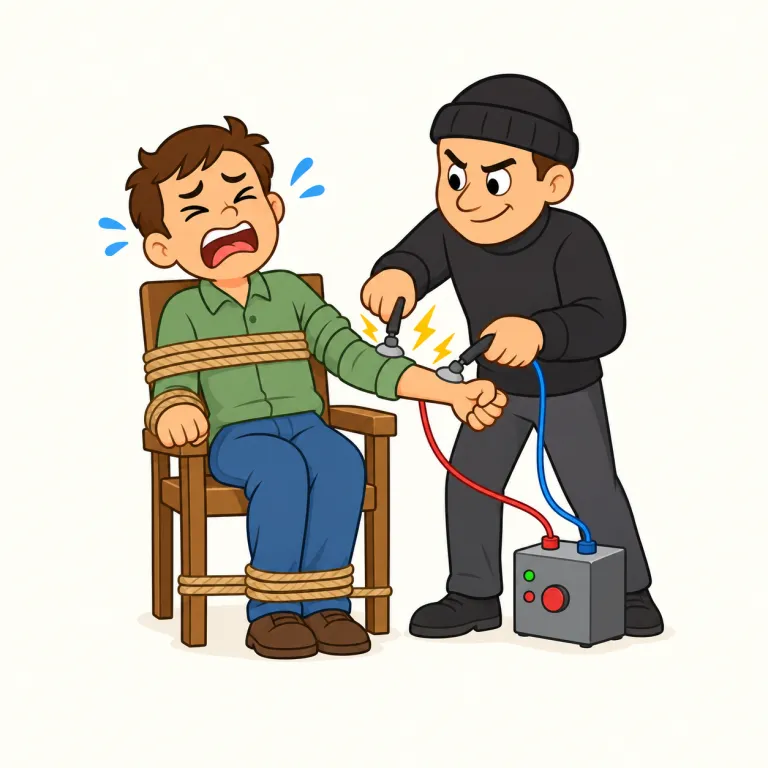
拷問
解説 Definition
torturing は、torture(拷問する)の動名詞で、意図的に人へ激しい身体的・精神的苦痛を与える行為を指します。処罰、威嚇、強制、情報の入手などを目的とする拷問を表す、重い意味の語です。
The act of deliberately causing a person severe physical or mental pain, especially to punish, intimidate, coerce, or obtain information. The term denotes grave abuse and is often used in legal and human-rights contexts.
使い方 Usage
使い分け Common distinctions
- hurting よりはるかに重い意味で、意図的に激しい苦痛を与える行為を指します。法律や人権に関する文脈で使われます。 Torturing is much stronger than hurting and denotes deliberately causing severe suffering. It is used in legal and human-rights contexts.
覚え方のコツ Memory Tip
torture の語末 e を取って -ing を付け、torturing にします。発音は /ˈtɔːrtʃərɪŋ/。単に傷つけることではなく、意図的に激しい苦痛を与える行為と結び付けて覚えましょう。
Drop the final silent e of torture and add -ing: /ˈtɔːrtʃərɪŋ/. The historical image of twisting can aid recall, but the modern meaning is deliberately inflicting severe suffering and does not require literal twisting.
例文
The report described torturing prisoners as a serious crime.
その報告書は、囚人を拷問することを重大な犯罪と位置づけていました。
The court investigated claims that soldiers had been torturing prisoners during the conflict.
裁判所は、紛争中に兵士たちが囚人を拷問していたという訴えを調査しました。
torturing の類義語・関連語
torturing の語源・成り立ち Etymology
torturing は torture「拷問する」に -ing が付いた形で、語源はラテン語 torquere「ねじる・よじる」です。体や心を“ねじ曲げて苦しめる”感覚が元にあり、同根語に torture、contort があって、拷問の意味に自然につながります。
“Torturing” is the -ing form of the verb “torture.” “Torture” came into English through French and ultimately derives from Late Latin “tortura,” related to Latin “torquere,” meaning to twist. The earlier association was with twisting or bodily torment, but the word broadened to cover the deliberate infliction of severe physical or mental pain. “Contort,” meaning to twist out of shape, shares the Latin root.
同じレベルの語彙をもっと
外部辞書で調べる
この英単語をクイズで覚えよう