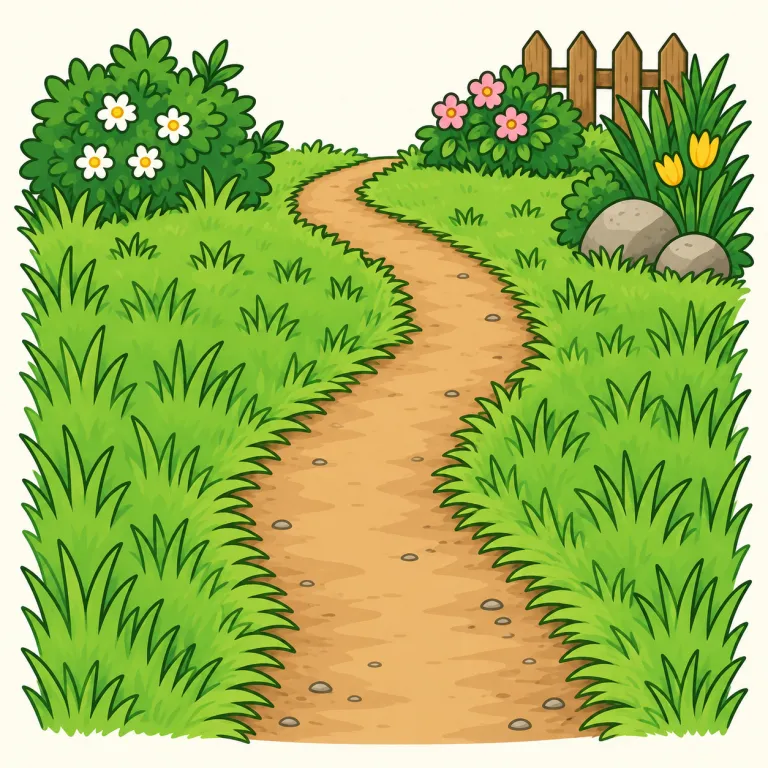
踏まれた
解説 Definition
trodden は tread(踏む、歩く)の過去分詞で、踏まれた、踏み固められたという意味です。道や草、地面などが人や動物に踏まれた状態を表すときによく使われます。
Trodden is the past-participle form of tread and describes ground, grass, or a path that has been stepped on, often repeatedly and firmly. It can also appear figuratively for a route, method, or subject that many people have already followed or explored.
覚え方のコツ Memory Tip
tread「踏む・歩く」の不規則な過去分詞で、tread–trod–troddenと変化し、troddenは /ˈtrɒdən/ または /ˈtrɑːdən/。trodden path、trodden grassのように、人や動物が繰り返し踏んで道や草が押し固められた場面で覚える。比喩的なwell-trodden pathなら「よく知られた方法」も表す。
Learn the irregular sequence tread–trod–trodden. Trodden is the past participle, pronounced /ˈtrɒdən/ in much British English and /ˈtrɑːdən/ in much American English. Picture a trodden path or trodden grass: repeated footsteps have pressed the surface down and revealed where people walked. This concrete image also explains the figurative phrase a well-trodden path, meaning a familiar method or course followed by many people. Do not build the participle as treaded in this sense; trodden is the established form used both after have and before nouns.
例文
The trodden path led through the garden.
踏み固められた小道が庭を通っていました。
Trodden grass showed where people had crossed the field.
踏まれた草が、人々が畑を横切った場所を示していました。
The old road was narrow and deeply trodden.
その古い道は狭く、深く踏み固められていました。
trodden の類義語・関連語
類義語
対義語
紛らわしい語
trodden の語源・成り立ち Etymology
古英語 tredan(踏む、歩く)の過去分詞形。ゲルマン祖語 *tredaną に遡り、ドイツ語 treten(踏む)と同根。動詞 tread、名詞 trade(元は「踏み固めた道→商取引路」)が関連語。人に踏まれた道という具体的イメージから比喩的な「踏みにじられた」の意味も持つ。
Trodden is the inherited past participle of tread. Tread comes from Old English tredan, “to step, walk, or trample,” and is related to German treten. The English verb belongs to a Germanic group of words associated with stepping. Its irregular vowel and participial ending preserve an old pattern rather than the regular modern -ed formation. The literal image of ground repeatedly pressed by feet later supported figurative expressions such as a well-trodden path for a familiar course or method.
同じレベルの語彙をもっと
外部辞書で調べる
この英単語をクイズで覚えよう