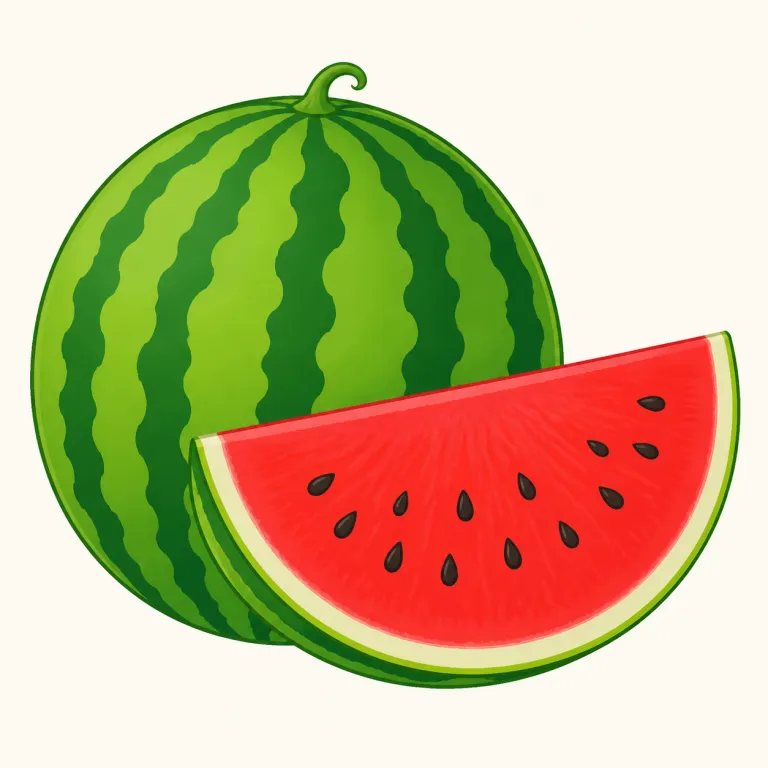
スイカ
解説 Definition
スイカという意味です。大きくて水分の多い果物を指し、英語では water と melon が合わさった語です。日本語の「ウォーターメロン」と言うこともありますが、日常では「スイカ」に当たります。
A large, round or oval fruit with a hard green rind, sweet watery flesh, and usually many dark seeds. Its flesh is commonly red or pink, although some varieties are yellow or orange.
覚え方のコツ Memory Tip
water「水」と melon「ウリ・メロン」をそのまま結んだ複合語です。水分が多い大きなスイカを割って皆で食べる場面を思い浮かべ、eat watermelon、a slice of watermelon、share a watermelon の形で覚えましょう。英語では通常、果物の種類や食べ物としては無冠詞でも使います。
The word explains itself: water plus melon. Think of cutting open a large green melon whose flesh is especially juicy and refreshing. That strong connection with water makes the compound easy to remember. Learn it in everyday combinations such as eat watermelon, a slice of watermelon, watermelon seeds, and share a watermelon. When referring to the fruit as food in general, English often uses it without an article, as in “We ate watermelon.” For one whole fruit, say “a watermelon.”
例文
I ate watermelon.
私はスイカを食べました。
This watermelon is cold.
このスイカは冷えています。
We shared a big watermelon.
私たちは大きなスイカを分けて食べました。
watermelon の類義語・関連語
派生語
紛らわしい語
watermelon の語源・成り立ち Etymology
water(水)+ melon(メロン)の複合語。melon はラテン語 melopepo(瓜)からギリシャ語 mēlon(果実)+ pepōn(熟した)に遡る。水分が約92%と非常に多い瓜であることからこの名がついた。関連語に melon(メロン)、pumpkin(pepōn 由来)がある。名前の通り「水の瓜」という直球の命名。
Watermelon is a transparent compound of water and melon, named for the fruit’s notably watery flesh. Melon entered English through French and Latin; the Latin form melopepo ultimately reflects Greek words associated with fruit and a ripe gourd. The English compound has been used for centuries to distinguish this especially juicy fruit from other kinds of melon. The related word pumpkin also has a history connected with Greek pepōn.
同じレベルの語彙をもっと
外部辞書で調べる
この英単語をクイズで覚えよう