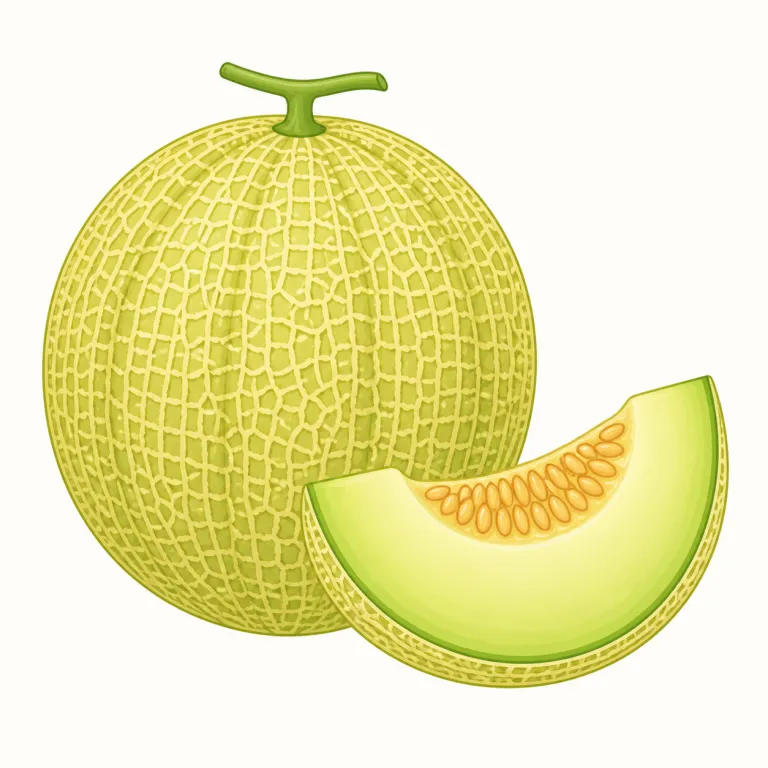
メロン
解説 Definition
メロンという意味です。甘い果肉を持つ果物を指します。日本語の「メロン」と近い意味ですが、英語では種類によって cantaloupe や honeydew など具体名で言うこともあります。
A melon is a large, round or oval fruit with a thick skin, soft juicy flesh, and many seeds. The word covers several varieties, including cantaloupes and honeydew melons.
覚え方のコツ Memory Tip
日本語の「メロン」とほぼ同じだが、英語では melon がウリ科の甘い果物の総称になり、cantaloupe や honeydew が具体的な種類を表す。sweet melon、cut a melon、a slice of melon のように、味・切る動作・一切れという典型表現と結びつけて覚える。
Connect melon with the familiar Japanese loanword メロン, but remember that the English word is a broad category rather than the name of only one variety. A cantaloupe and a honeydew are both kinds of melon. Picture cutting through the thick skin to reveal sweet, juicy flesh and seeds. Useful combinations include sweet melon, cut a melon, a slice of melon, and melon seeds. These concrete food expressions make the word easy to retrieve in conversation.
例文
I want melon.
私はメロンが欲しいです。
The melon is very sweet.
そのメロンはとても甘いです。
He cut the melon for us.
彼は私たちのためにメロンを切ってくれました。
melon の類義語・関連語
melon の語源・成り立ち Etymology
ギリシャ語 melopepon(りんごのようなウリ)から。melon(りんご)+ pepon(熟した)が語根で、ラテン語・フランス語を経て英語に。元は「りんご」を意味し、marmalade(マーマレード)のmelo-も同根。甘い大きな果実の総称として定着した。
English melon came through Old French and Latin from Greek mēlopepōn, a compound referring to a gourdlike fruit. Its elements were mēlon, meaning “apple” or fruit, and pepōn, meaning “ripe.” The name therefore described a ripe, apple-like fruit before developing into the general English term for large, sweet fruits such as cantaloupes and honeydews.
同じレベルの語彙をもっと
外部辞書で調べる
この英単語をクイズで覚えよう