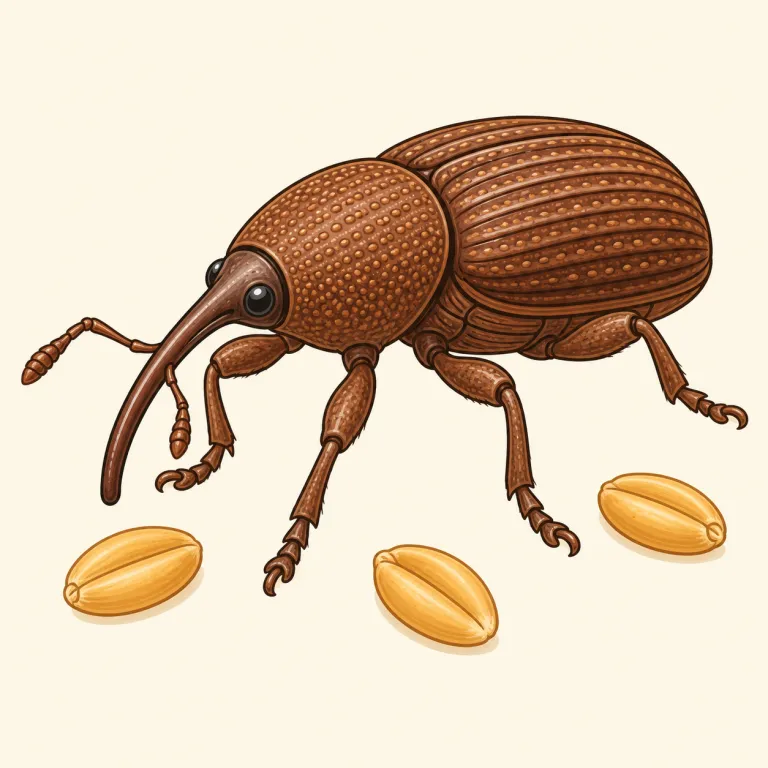
ゾウムシ
解説 Definition
象鼻虫の総称。穀物やナッツなどの植物製品を食べる害虫である。
A weevil is a small beetle, often with a long nose-like mouth part. Many weevils damage crops or stored food such as rice and grain, so the word is often used in farming or pest control contexts.
覚え方のコツ Memory Tip
語感でまず evil を連想すると覚えやすい。つづりもかなり近く、weevil は“穀物やナッツに入りこんで被害を出す、いやな小虫”という印象で固定できる。rice weevil, grain weevil, nut weevil のように、食べ物や農産物の名と結びついて出ることが多い。beetle の仲間だが、ただの甲虫ではなく“保存中の食品を食う害虫”まで含めて覚えるのがコツ。pantry, stored grain, infestation などの文脈に出たらこの語を思い出す。worm ではなく小型の甲虫名だと押さえると混同しにくい。
`Weevil` looks and sounds close to `evil`, which is a useful hook. Think of a tiny “evil” bug getting into rice, grain, or nuts in storage. It is a kind of beetle, often remembered in food-damage contexts like `grain weevil`.
例文
The farmer discovered weevils infesting the stored grain in his barn.
農民は納屋に保管されている穀物に付いたゾウムシを発見した。
Weevils can cause significant damage to crops if not controlled with proper pesticides.
ゾウムシは、適切な農薬で駆除しなければ、作物に大きな被害を与える可能性がある。
The presence of weevils indicated that the rice had been stored improperly for several months.
ゾウムシの存在は、米が数ヶ月間不適切に保管されていたことを示していた。
weevil の類義語・関連語
類義語
紛らわしい語
weevil の語源・成り立ち Etymology
weevil は古英語 wifel/wibil にさかのぼる古いゲルマン系の語で、穀物につく小さな甲虫を指しました。学術語ではなく生活の中の虫の呼び名がそのまま残った語で、近縁語にオランダ語 wevel があります。
Weevil is a very old Germanic word that goes back to Old English forms such as wifel and wibil. It was an everyday name for a small beetle found in stored grain, rather than a learned scientific term. Related forms appear in other Germanic languages, including Dutch wevel.
同じレベルの語彙をもっと
外部辞書で調べる
この英単語をクイズで覚えよう