大船団、大集団
noun 名詞軍艦に限らず、多数の船や航空機、車両などが集まった大規模な一団を指します。しばしば an armada of ... の形で用いられ、数の多さや集団の壮観さを強調する表現です。
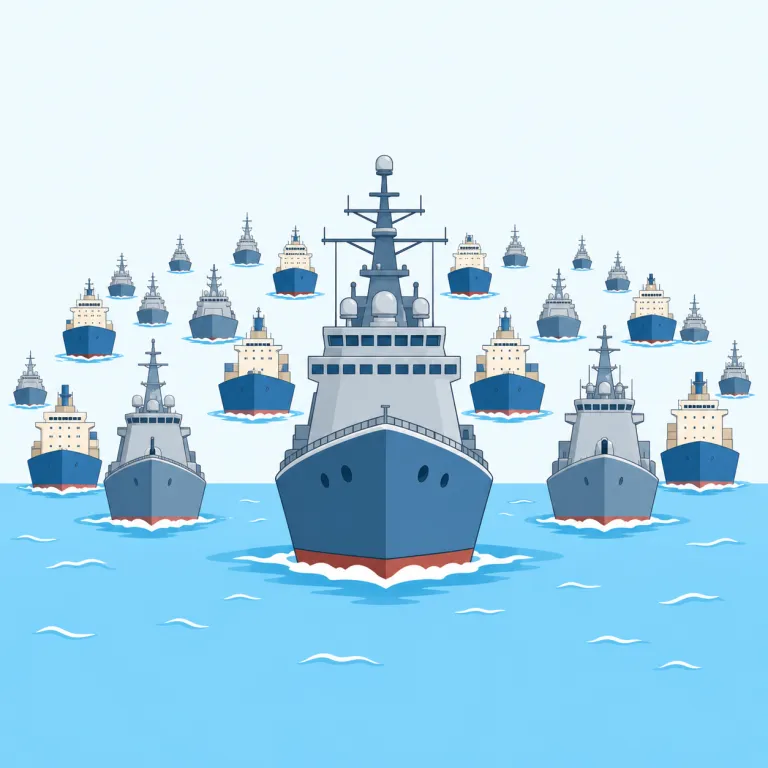
多数の軍艦で構成された大規模な船隊を表す名詞です。特に戦時中に敵と対抗するために集結させられた艦隊全体を指します。
An armada is a large group of warships or other ships traveling together. It can also be used more generally for a large, impressive collection of vehicles or forces.
まずは `fleet` よりもずっと重く、戦争の気配がある語として覚えると残りやすいです。`arm` や `armed` を知っていれば、「武装した船がずらっと並ぶ感じ」を連想できます。単なる船の集まりではなく、圧倒的な数と威圧感のある“大艦隊”が core。`an invading armada` や `a naval armada` のように、攻め込む・対抗する場面で出やすい語です。`fleet` は中立的、`armada` は軍事色が強い、と分けると混同しにくくなります。
The middle looks like `arm` or `armed`, which can remind you of military power. So `armada` is not just any group of ships, but a large, powerful fleet with a warlike feeling. Phrases like `an invading armada` make that strong image easy to keep.
The Spanish Armada sailed toward England in 1588.
スペイン艦隊は1588年にイギリスに向かって航海しました。
The armada was assembled to protect the trade routes.
艦隊は貿易ルートを守るために集結しました。
An impressive armada demonstrated the nation's military power.
堂々たる艦隊がその国の軍事力を示しました。
文脈によって、次の意味でも使われます。
軍艦に限らず、多数の船や航空機、車両などが集まった大規模な一団を指します。しばしば an armada of ... の形で用いられ、数の多さや集団の壮観さを強調する表現です。
armada はスペイン語 armada「武装した艦隊」から英語に入り、さらにラテン語 armare「武装させる」にさかのぼります。arm- は「武器」の核で、army や armament も同根です。つまり『武装された集団』が、そのまま艦隊の意味になった語です。
Armada came into English from Spanish armada, meaning an armed fleet. It goes back to Latin armare, meaning "to arm" or "equip with weapons." The central idea is a group made ready for war, which is why the word became strongly linked with fleets of warships. Related English words include army and armament.
この英単語をクイズで覚えよう