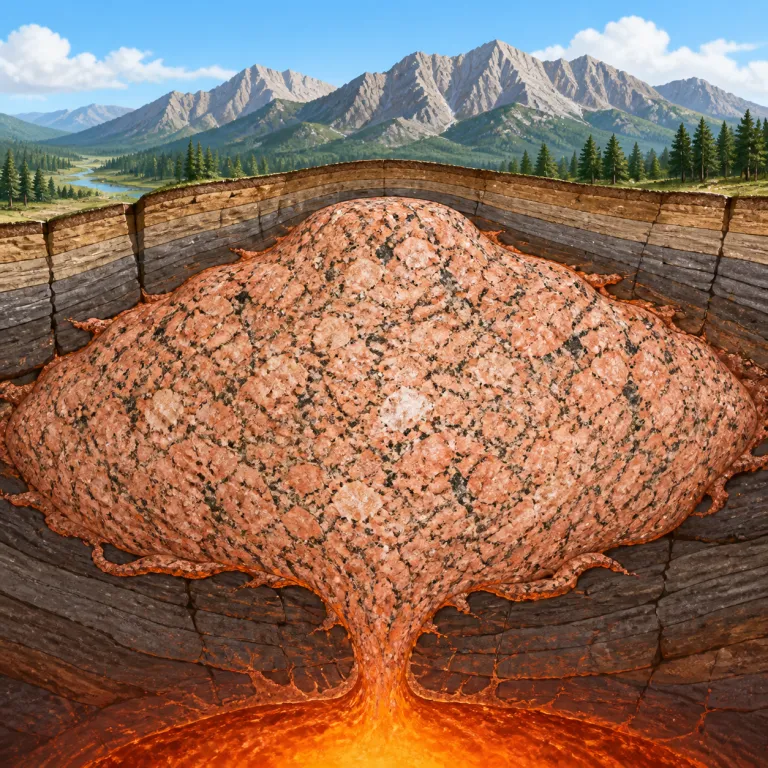
深成岩体
解説 Definition
地下深くに形成された大規模な岩体、特に花崗岩やその他の貫入岩。地質学の用語で、冷却固化した大量のマグマを指します。
A batholith is a very large mass of igneous rock that formed deep underground when molten rock cooled slowly. It is a geology term used to describe major rock structures inside the earth's crust. Parts of a batholith may later become visible at the surface through erosion.
覚え方のコツ Memory Tip
monolith(一枚岩)や megalith(巨石)を見たことがあれば、-lith は「岩・石」系の専門語だとまとめて覚えると入りやすいです。batholith はその中でも、地表に見えている岩ではなく、地下深くでマグマがゆっくり冷えてできた“巨大な本体”を指す語。噴火で流れ出た lava のような表の現象ではなく、地中にどっしり残る大規模な岩塊を思い浮かべると定着します。granite batholith のように花崗岩と一緒に出やすく、小さな岩脈ではなく山地の骨格になるほど大きい、というスケール感までセットで覚えるのがコツです。
The ending `-lith` appears in words about stone or rock, like `monolith`. So `batholith` is clearly a geology word, and you can remember it as a huge mass of rock deep underground, not rock on the surface. Think of something massive forming the hidden base of a mountain area.
例文
The batholith extends for hundreds of kilometers underground.
その深成岩体は地下に数百キロメートル広がっている。
Geologists study batholiths to understand crustal formation.
地質学者は地殻形成を理解するために深成岩体を研究する。
The granite batholith was formed millions of years ago.
花崗岩の深成岩体は数百万年前に形成された。
batholith の類義語・関連語
類義語
紛らわしい語
batholith の語源・成り立ち Etymology
batholith は地質学の語で、ギリシャ語 bathos「深さ」と lithos「石・岩」に由来します。つまり「深い所にある岩の塊」という成り立ちで、地下深部で固まった巨大な深成岩体を指すのが納得できます。関連語は bathymetry, monolith。
Batholith is a geology term built from Greek bathos, meaning "depth," and lithos, meaning "stone" or "rock." The original sense is literally a "deep rock." That fits how the word came to mean a huge mass of rock formed deep underground. Related words include bathymetry and monolith.
同じレベルの語彙をもっと
外部辞書で調べる
この英単語をクイズで覚えよう