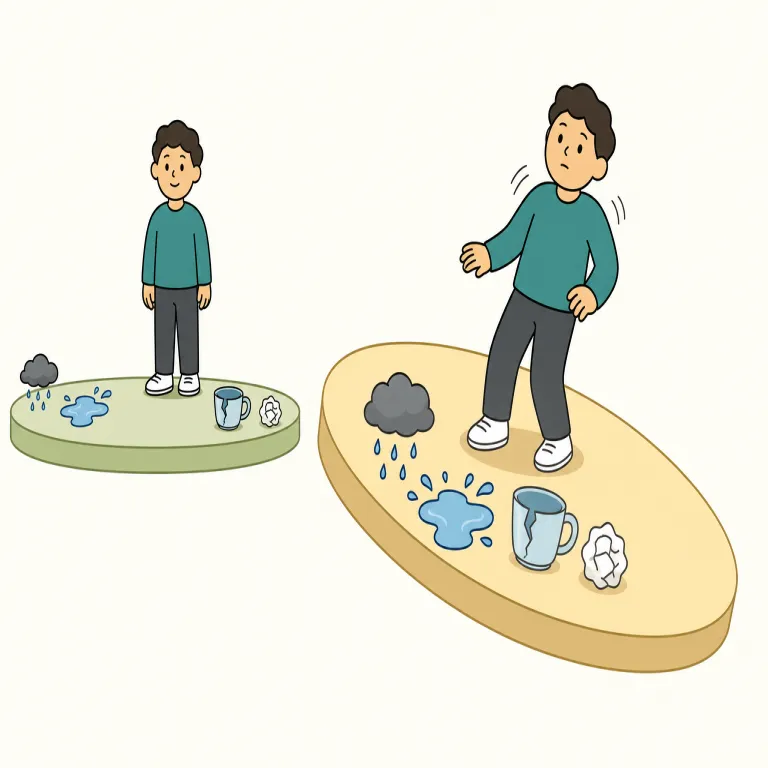
be prone to
be prone to は英検準1級レベルの英熟語で、「陥りやすい」という意味があります。発音記号は /ˈbiː ˈproʊn ˈtuː/ です。
陥りやすい
解説 Definition
ある行動や状態に陥りやすい性質を表します。性格や体質、習慣などが原因で、そうした動きやすい方向に陥りがちな相手や状況の説明に向いています。
"Be prone to" means to be likely to do something or to experience a particular problem. It is often used for habits, mistakes, illnesses, or weak points. The phrase usually suggests that something happens more easily or more often than normal.
覚え方のコツ Memory Tip
prone は単独で覚えるより、まず error-prone / accident-prone の形で見ると定着しやすいです。「ミスを起こしがち」「事故を起こしがち」のように、本人や物事の性質として悪い方向へ傾きやすい感じ。be likely to が単なる起こりやすさなのに対し、be prone to は弱点・体質・癖から繰り返しそうなニュアンスが強め。be prone to illness, be prone to making mistakes などの相性で覚えると使いやすいです。
This phrase is easy to remember through common pairs like accident-prone and error-prone. It suggests a repeated tendency, often because of weakness, habit, or natural risk. So be prone to is stronger than just likely to.
例文
He is prone to forget important dates unless he writes them down.
彼は書き留めておかないと重要な日付を忘れがちだ。
This region is prone to earthquakes because it lies on multiple fault lines.
この地域は複数の断層の上にあり地震が発生しやすい。
Older machines can be prone to sudden breakdowns.
古い機械は突然故障しやすいことがある。
be prone to の類義語・関連語
be prone to の語源・成り立ち Etymology
proneはラテン語pronus(前に傾いた)から。pro-(前へ)が語源で、「前のめりに倒れやすい」が原義。propensity(傾向)やincline(傾く)が類義の関連語。前方に傾いている→「ある方向に傾きやすい、陥りやすい」という意味になった。
Prone comes from Latin pronus, meaning bent forward or leaning downward. The original image is of something physically tilted forward and ready to fall. From that, English developed the figurative sense of being naturally inclined toward something. A related word is propensity, which keeps the idea of a leaning or tendency.
同じレベルの語彙をもっと
英検準1級の一覧へ →外部辞書で調べる
この英熟語をクイズで覚えよう