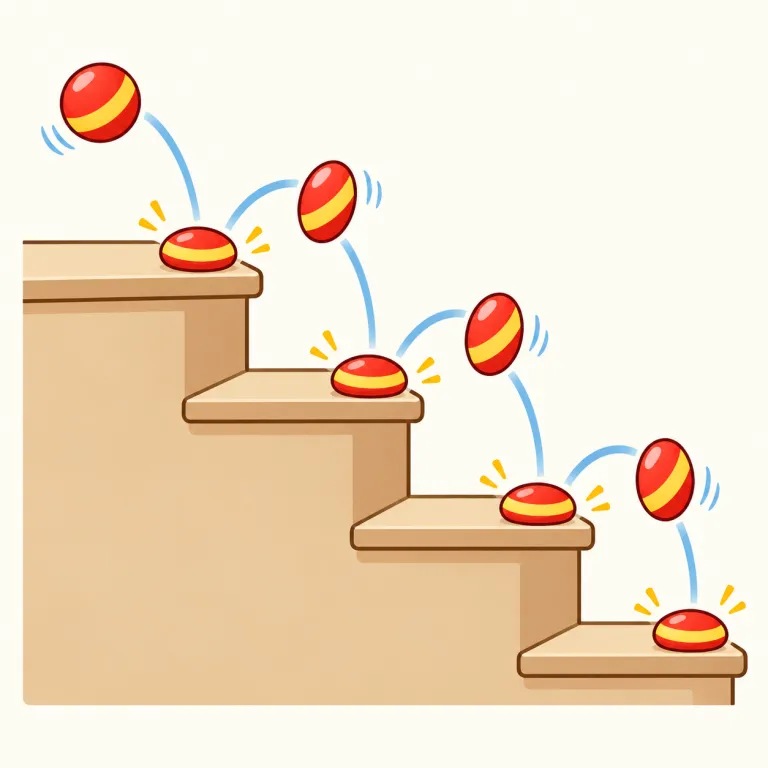
跳ねる
解説 Definition
bouncing は bounce(跳ねる、弾む)の現在分詞・動名詞です。ボールや物が上下に跳ねている動きを表すときによく使います。
Bouncing is the present participle and gerund form of bounce. It describes repeatedly hitting a surface and moving back up or away, as when a rubber ball continues to spring from the floor.
覚え方のコツ Memory Tip
bouncing は原形 bounce に -ing を付けた現在分詞・動名詞です。bounce の末尾 e を落として bouncing とし、発音の中心は /baʊns/ のままです。be bouncing なら「跳ねている」、keep bouncing なら「跳ね続ける」。床に当たって戻るボールの反復運動を思い浮かべましょう。
Start with the base verb bounce, meaning to hit a surface and spring back. To form bouncing, drop the final silent e and add -ing; the main sound of bounce remains /baʊns/. Use “is bouncing” for an action in progress and “kept bouncing” for repeated movement that continued. Picture a rubber ball striking the floor, rising, falling, and striking it again. That repeated contact-and-return pattern is the core image. Do not confuse bouncing with rolling, which normally keeps an object in contact with the surface.
例文
The ball is bouncing on the floor.
ボールが床の上で跳ねています。
A small rubber ball kept bouncing down the stairs.
小さなゴムボールが階段を跳ねながら落ちていきました。
The children watched the orange ball bouncing across the yard.
子どもたちはオレンジ色のボールが庭を跳ねていくのを見ていました。
bouncing の類義語・関連語
bouncing の語源・成り立ち Etymology
中英語bounsen(打つ、跳ねる)が起源で、低地ドイツ語のbunsen(打つ)やオランダ語のbonzen(太鼓を打つ)と関連。「衝突して跳ね返る」が原義で、bound(跳ぶ)やrebound(反発する)と同根。弾力のあるものがぶつかって戻る動きが核心のイメージ。
Bouncing is formed regularly from bounce by dropping the final silent e and adding the participial suffix -ing. Bounce appeared in Middle English in forms such as bounsen and referred to striking or thumping before developing the sense of springing back after impact. It has been compared with related Low German and Dutch words for beating or striking, although the deeper history is not completely certain. The modern form emphasizes repeated impact and return.
同じレベルの語彙をもっと
外部辞書で調べる
この英単語をクイズで覚えよう