意味一覧 (2件)
スポンジ、海綿
解説 Definition
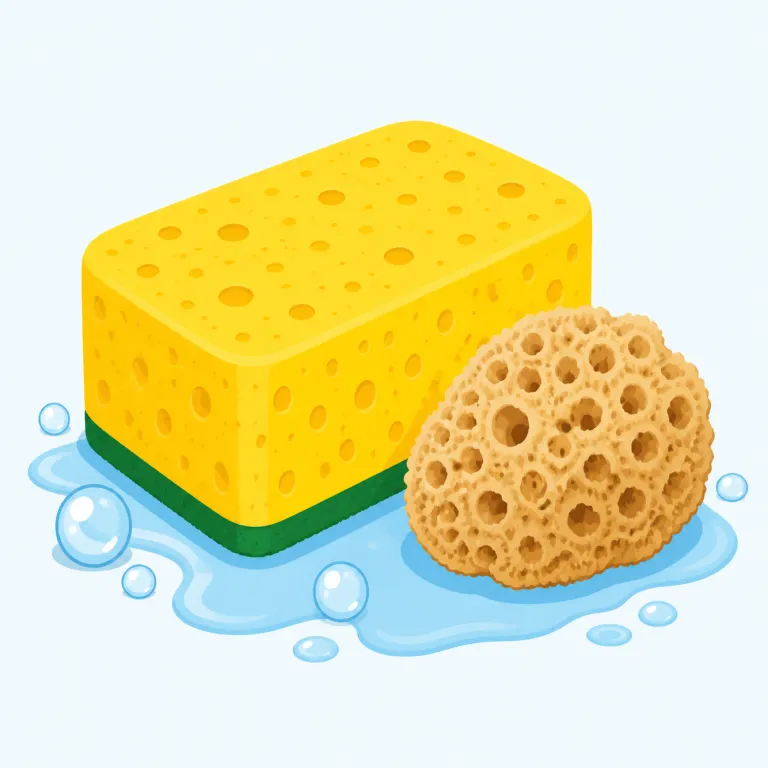
液体をよく吸い取る、穴の多いやわらかな素材や道具を指す。掃除、洗浄、入浴などに使われ、天然の海綿を指すこともあれば、台所用や洗車用の合成スポンジを指すこともある。用途によって形や硬さはさまざまで、日用品として広く使われる。
A sponge is a soft, light material full of small holes that absorbs water and other liquids. People use it for washing dishes, cleaning surfaces, or bathing. The word can also mean the simple sea animal that this material originally came from.
覚え方のコツ Memory Tip
日本語の「スポンジ」とほぼ同じ形なので、まず音で定着させやすい語です。覚える軸は「穴が多く、液体をぐんぐん吸い取るやわらかいもの」。kitchen sponge, bath sponge のように日常場面でよく出ます。布は拭く、ブラシはこする、sponge は吸う、という役割の違いで整理すると記憶に残ります。さらに spongy を見たときも「スポンジみたいにふわっとして水を含みやすい感じ」と連想でき、語群で覚えやすくなります。
This word is close to the international word "sponge," so the sound is easy to keep in mind. Picture a soft thing full of small holes that soaks up water fast. Remember it with everyday pairs like "kitchen sponge" and "bath sponge," and connect "spongy" as the adjective form.
例文
The kitchen sponge absorbed the spilled juice before it could stain the counter.
キッチンのスポンジがこぼれたジュースを吸い取り、カウンターにしみが残るのを防いだ。
She bought a new sponge for the kitchen.
彼女は台所用に新しいスポンジを買いました。
This sponge dries faster than a natural sponge.
このスポンジは天然のスポンジより早く乾きます。
たかり屋、居候
(意味 2)
解説 Definition
人に金や食べ物、泊まる場所などを当てにして、自分ではあまり負担しない人を指す名詞です。くだけた表現で、他人の親切や好意につけこんで暮らすような、否定的なニュアンスで使われます。
A person who relies on others for money, food, or accommodation while contributing little themselves. This informal noun expresses disapproval of someone who takes advantage of other people's generosity.
覚え方のコツ Memory Tip
日本語の「スポンジ」とほぼ同じ形なので、まず音で定着させやすい語です。この語義では、スポンジが水をぐんぐん吸い取るように、人のお金・食べ物・好意を吸い取って暮らす人を思い浮かべると覚えやすい。kitchen sponge の物としての意味と切り分け、a sponge と人に使われたら「自分で払わずにたかる人」という否定的な響きになります。freeloader と近い場面で出る語として整理すると残ります。
Picture a sponge soaking up water, then imagine a person soaking up other people's money, food, and kindness. When used about a person in this sense, the word suggests taking without paying a fair share.
例文
He never paid for food, so everyone called him a sponge.
彼は食事代を一度も払わず、みんなからたかり屋と呼ばれた。
Her cousin stayed for free and acted like a sponge.
彼女のいとこはただで居候し、たかり屋のように振る舞った。
Don't be a sponge; pay for your own meal sometimes.
人にたからず、たまには自分の食事代を払いなさい。
sponge の類義語・関連語
sponge の語源・成り立ち Etymology
sponge はギリシャ語 spongos「海綿」がラテン語 spongia、古フランス語 esponge を経て入った語。spongy も同根で、水を吸い取る海綿のイメージが、そのままスポンジや「人にたかる人」の意味へ広がった。
Sponge came into English from Old French esponge, from Latin spongia, and earlier from Greek spongos, meaning "sea sponge." The word first named the natural sea material that absorbs water. Later, that idea of soaking things up helped create related forms like spongy and also figurative uses such as a person who lives off others.
同じレベルの語彙をもっと
外部辞書で調べる
この英単語をクイズで覚えよう