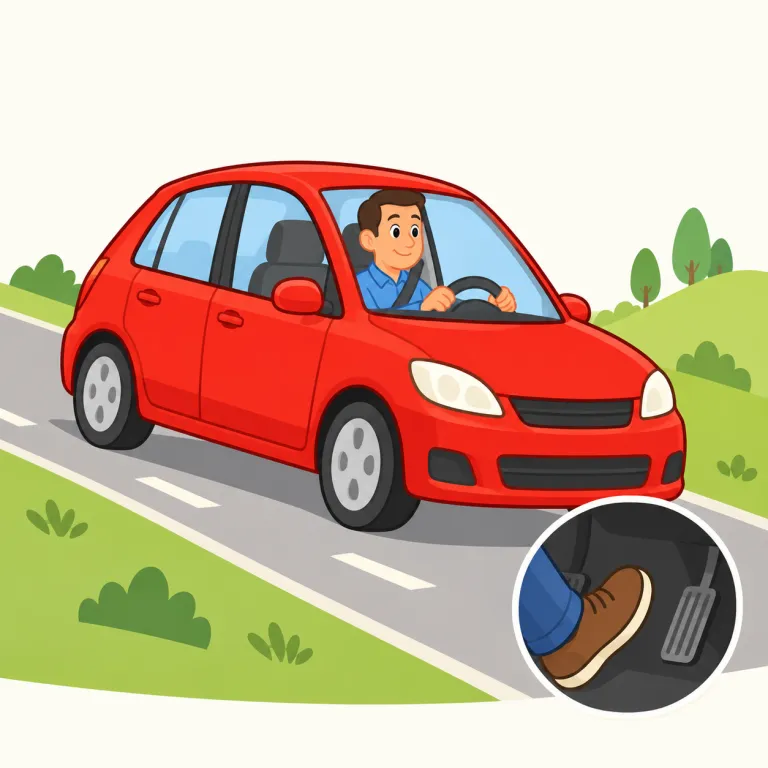
惰性走行
解説 Definition
coasting は coast(惰性で進む、滑走する)の現在分詞・動名詞です。車や自転車などが動力をあまり使わず、勢いのまま進むことを表します。
The act of continuing to move in a vehicle or on a bicycle with little or no power being applied, using existing momentum or gravity. It often occurs when traveling downhill or slowing toward a stopping point.
覚え方のコツ Memory Tip
原形 coast に -ing を付けた形で、e を落とさず coasting と書き、母音は coast と同じです。車や自転車がエンジンやペダルの力をほとんど使わず、すでに得た勢いや下り坂で進む場面を思い浮かべます。coasting downhill「坂を惰性で下る」を核にし、gliding より車輪のある乗り物の惰性走行に結び付けます。
Form coasting by adding -ing to coast; keep the final e because it is part of the vowel spelling. Picture a bicycle rolling downhill while the rider stops pedaling, or a car moving toward a traffic light without active acceleration. The vehicle continues through momentum or gravity. Learn the phrase “coasting downhill” as the central image. Gliding also suggests smooth, easy movement, but coasting is especially useful for wheeled vehicles moving with little or no power. As a gerund, it names this kind of motion itself.
例文
The driver saved fuel by coasting down the long hill.
運転手は長い坂を惰性で下って燃料を節約しました。
Coasting on a bicycle can be dangerous on a busy road.
交通量の多い道路で自転車を惰性で走らせるのは危険です。
The car was coasting slowly toward the traffic light.
車は信号に向かってゆっくり惰性で進んでいました。
coasting の類義語・関連語
coasting の語源・成り立ち Etymology
coasting は coast からできた語で、coast は古フランス語 coste、さらにラテン語 costa「肋骨、側面」に由来します。「側面に沿って進む」が「坂をすべる」「力を入れず進む」へ広がり、惰性走行の意味になりました。関連語は coast, accost。
Coasting is formed from the verb coast plus -ing. Coast came through Old French coste from Latin costa, meaning “rib” or “side.” The geographical sense developed from the idea of the side or edge of the land. The verb first referred to moving along a coast or boundary and later broadened to smooth, effortless movement, producing the modern sense of traveling through momentum or gravity without much power.
同じレベルの語彙をもっと
外部辞書で調べる
この英単語をクイズで覚えよう