頭側の、頭方の
adjective 形容詞解剖学で、人や動物の体のある位置が頭の方向にあることを示す用法です。cranial to ... の形で「…より頭側に」という位置関係を表し、尾の方向を示す caudal と対になります。
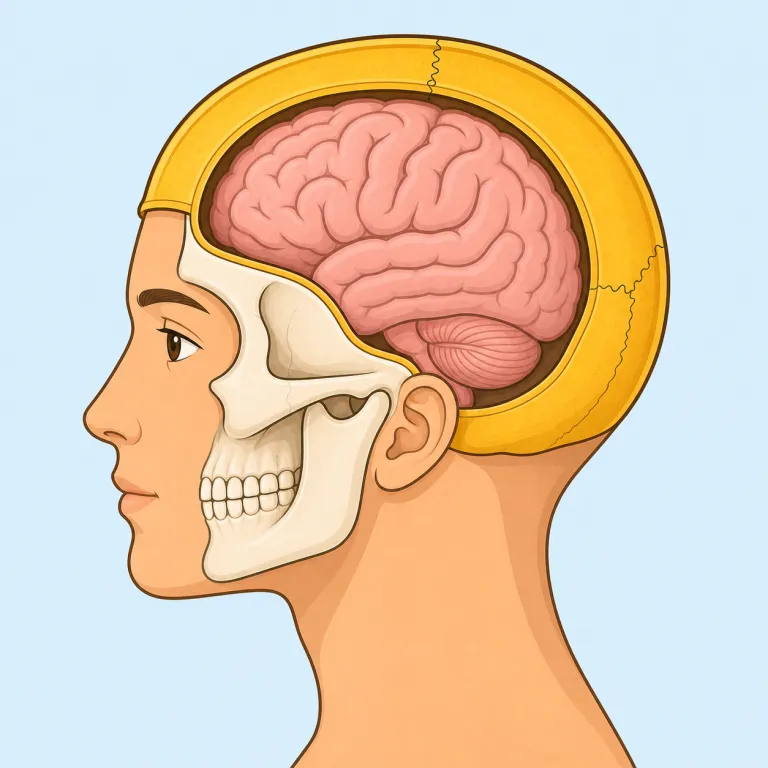
cranial は、頭蓋や頭蓋骨に関係することを表す形容詞です。医学や解剖学でよく使われ、神経、損傷、検査、構造などが頭部の骨格やその周辺に関連していることを示します。
Cranial means related to the skull or the head. It is mainly used in medical or scientific contexts, such as when talking about bones, nerves, or injuries. The word is more technical than the everyday word "head."
cranial は単独で覚えるより、cranial nerve, cranial injury, cranial cavity などのまとまりで入れると定着しやすい語です。形は facial, spinal などと同じく「部位を表す名詞+-al=その部位に関する」と見ると整理しやすいです。意味は brain そのものより skull の外枠、つまり頭蓋・頭骨まわりに寄るのがポイントで、cerebral(脳の)と混同しないこと。診断画像や解剖図で“頭の骨格側”を指す語として結ぶと残ります。
Remember it in common pairs like `cranial nerve` or `cranial injury`. The ending `-al` often means "related to," like in `facial` or `spinal`, so `cranial` means related to the cranium. Think of the skull area around the head, not the brain itself. That helps you keep it separate from `cerebral`.
The doctor ordered a cranial CT scan to check for any injuries.
医師はけががないか確認するため、頭部CT検査を指示した。
Cranial nerves control many of the body's vital functions.
脳神経は、体の多くの重要な機能を担っている。
CT scans can reveal cranial abnormalities and structural issues.
CTスキャンでは、頭蓋の異常や構造上の問題を明らかにできる。
文脈によって、次の意味でも使われます。
解剖学で、人や動物の体のある位置が頭の方向にあることを示す用法です。cranial to ... の形で「…より頭側に」という位置関係を表し、尾の方向を示す caudal と対になります。
cranial は近代ラテン語 cranium「頭蓋」に由来し、その奥はギリシャ語 kranion「頭骨」、さらに「頭・角」を表す印欧語根にさかのぼります。crani- に形容詞語尾 -al が付いて「頭蓋の」となり、cranium や migraine に同じ語根が見えます。
Cranial comes from Modern Latin cranium "skull," which goes back to Greek kranion "skull." It is related to an older Indo-European root connected with the head or horn. With the adjective ending -al, it developed the sense "relating to the skull," and it is related to cranium.
この英単語をクイズで覚えよう