怒り、かんしゃく
noun 名詞人の怒りや腹立ちを表す口語的な名詞です。主にget one's dander up「腹を立てる」やraise someone's dander「人を怒らせる」といった表現で使われ、皮膚から落ちる細片とは別の語義です。
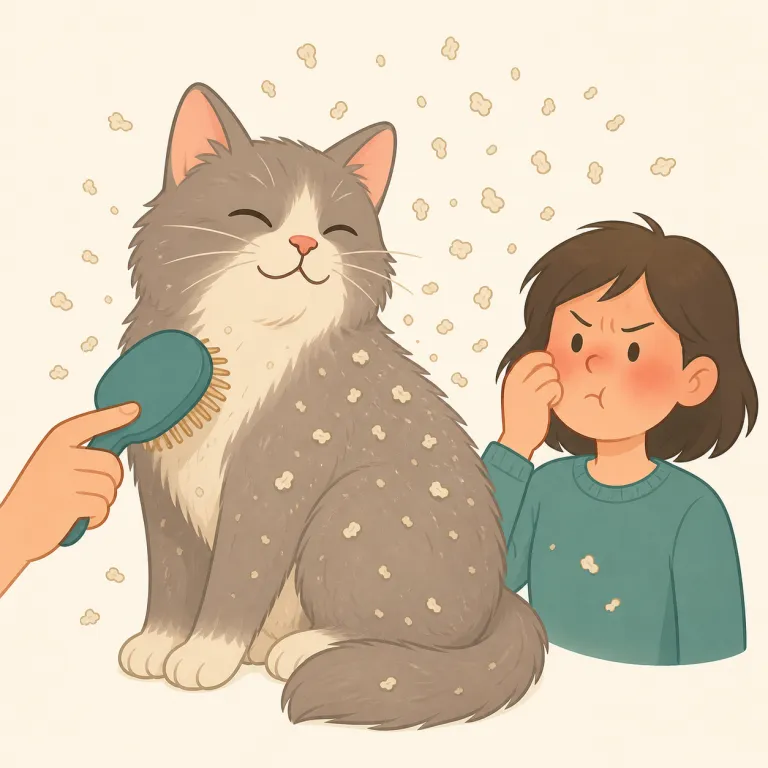
人や動物の体からはがれ落ちる細かな皮膚片。特に、アレルギーの原因となる犬や猫などの皮膚片を指してよく使われる。
Dander can mean small pieces of skin, especially from animals, that can cause allergies. It can also mean anger in older or idiomatic English. In modern everyday use, the skin-related meaning is more common, especially in health contexts.
dander は pet dander という組み合わせで、「ペットから落ちる細かな皮膚片」と覚えると定着しやすい語です。dandruff が主に頭皮のフケを指すのに対し、この語義の dander は動物などからはがれ落ち、アレルギーの原因にもなる細かな皮膚片を表します。danger とつづりが少し似ていますが、別の語です。
Link `dander` with `dandruff` because the forms look similar and both relate to tiny bits from skin. The phrase `pet dander` is especially common, so that is a useful memory anchor. Also remember `get one’s dander up`, a fixed expression for becoming angry.
Pet dander can trigger allergic reactions in sensitive people.
ペットの細かな皮膚片は、敏感な人にアレルギー反応を引き起こすことがある。
An air purifier can help reduce airborne dander in the home.
空気清浄機は、家の中を漂う細かな皮膚片を減らすのに役立つ。
The clinic tested him for an allergy to cat dander.
その診療所では、猫の皮膚片に対するアレルギーがあるか彼を検査した。
文脈によって、次の意味でも使われます。
人の怒りや腹立ちを表す口語的な名詞です。主にget one's dander up「腹を立てる」やraise someone's dander「人を怒らせる」といった表現で使われ、皮膚から落ちる細片とは別の語義です。
danderの「フケ」は近世英語dandroにさかのぼり、dandruffと同系だが前半要素の起源は不明で、後半は古ノルド語hrufa「かさぶた」に結びつくとされる。そこから米語で「怒り」の意も生まれ、毛や気が逆立つ感覚に結びついたと考えると意味の飛び方が見えやすい。dandruffが近親語。
Dander, in the sense of skin flakes, goes back to early modern English dandro and is related to dandruff. The first part of the word is unclear, but the ending may be linked to Old Norse hrufa, meaning something like a scab or rough crust. In American English, dander also came to mean anger, probably from the image of hair or fur rising when someone is upset. Dandruff is its closest related word.
この英単語をクイズで覚えよう