樹枝状結晶
noun 名詞鉱物学や材料科学で、木の枝のように分岐しながら成長した結晶構造を指す。金属の凝固時や電極表面への金属析出時などに形成され、神経細胞の樹状突起とは異なる専門的語義である。
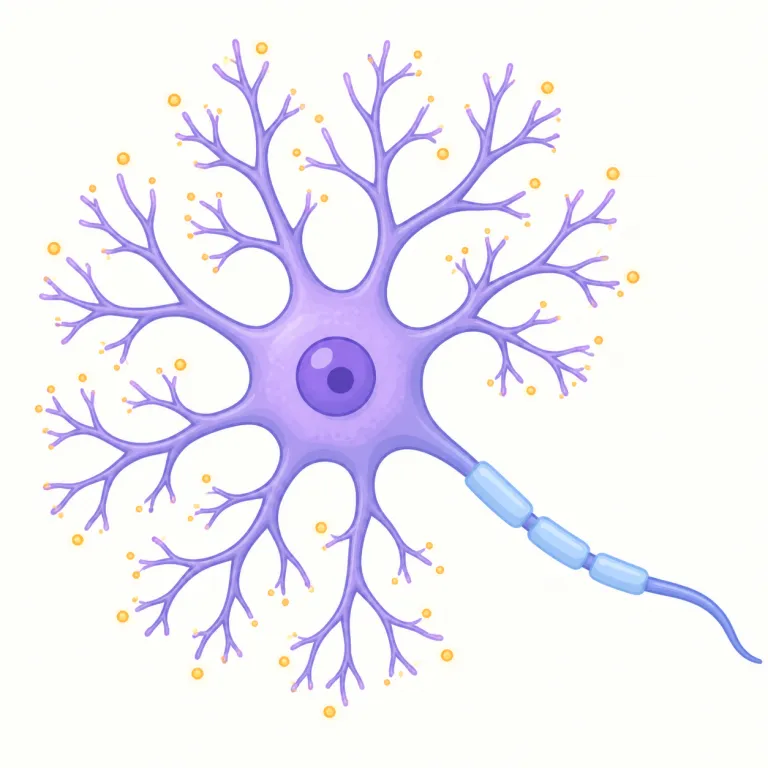
ニューロンの一部で、神経細胞体から伸びた枝状の構造。他の神経細胞からの信号を受け取り、処理する役割を果たす。
A dendrite is a branch-like part of a nerve cell that receives signals from other cells. It carries those signals toward the main body of the cell. This word is mainly used in biology and neuroscience.
dendrite は「木の枝みたいに広がる、信号を受ける側」で固定すると覚えやすいです。neuron を一本の木に見立てると、cell body のまわりから細い枝が何本も伸び、外から来た刺激を集めてくる部分が dendrite。反対に、長く一本のびて信号を送り出すのは axon です。図で見たときに『枝分かれして受け取る=dendrite』『一本長く送る=axon』とセットで押さえると、役割まで一緒に記憶できます。
Use the image of a tree: `dendr-` is connected with tree-like branching. A `dendrite` is the branch-like part, so picture many small branches spreading out from a cell. Remember it together with `axon`: `dendrite` branches and receives, while `axon` is the long single line.
The dendrite receives signals from adjacent neurons.
樹状突起は隣接する神経細胞からの信号を受け取る。
Synapses form at the tips of dendrites.
シナプスは樹状突起の先端に形成される。
The branching pattern of dendrites is crucial for neural function.
樹状突起の分岐パターンは神経機能にとって重要である。
文脈によって、次の意味でも使われます。
鉱物学や材料科学で、木の枝のように分岐しながら成長した結晶構造を指す。金属の凝固時や電極表面への金属析出時などに形成され、神経細胞の樹状突起とは異なる専門的語義である。
dendrite はギリシャ語 dendron「木」と、形や性質を表す -ite に由来し、「木のようなもの」が原義です。神経細胞から枝分かれして伸びる形が木の枝に似るため、「樹状突起」という意味になりました。関連語は dendrology, rhododendron。
Dendrite comes from Greek dendron, meaning "tree," plus -ite. Its original sense was "something tree-like." The word was later used for branching forms because they look like tree branches; related words include dendrology and rhododendron.
この英単語をクイズで覚えよう