descendent
descendent はTOEIC 860・TOEFL 80・IELTS 6.5レベルの英単語で、「子孫」という意味があります。発音記号は /dɪˈsɛndənt/ です。
子孫
解説 Definition
ある人の血統を受け継ぐ子や孫などの後の世代の人。子孫。
A descendent is a person, animal, or plant that comes from an earlier ancestor. It is used when talking about family history, later generations, or the origin of living things. This spelling is less common than the more standard form "descendant."
覚え方のコツ Memory Tip
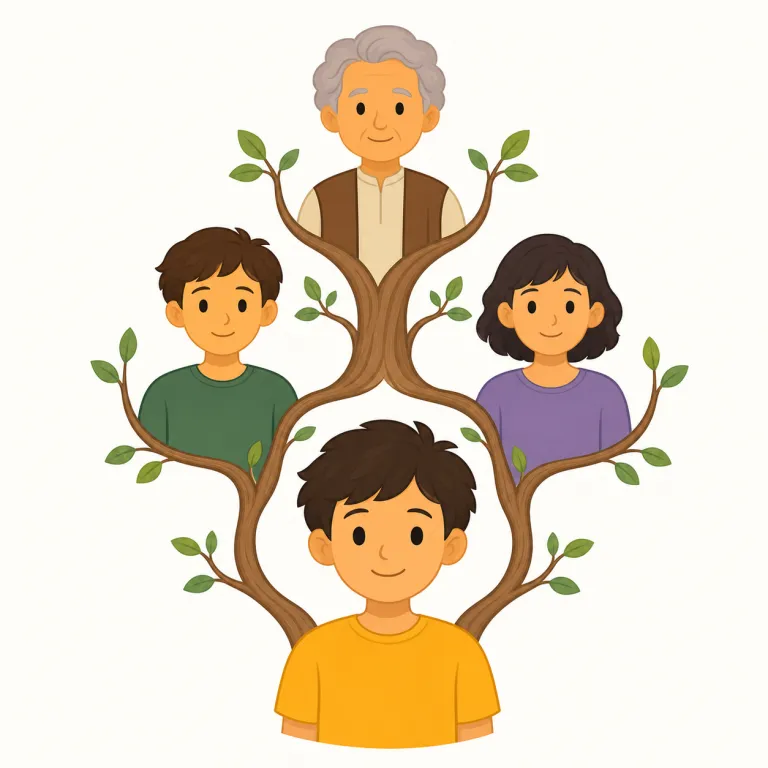
descend(下る)を知っていれば、「家系図で上の世代から下に降りてきた人」→子孫とつながる。ancestor が「先祖」で、その反対側にいるのが descendent / descendant。家系図を上から下へたどる絵を頭に置くと定着しやすい。歴史や王家の説明では a descendent of ... の形で「〜の子孫」として出やすい。なお、名詞では descendant のつづりのほうが一般的なので、両方を同じ意味圏としてまとめて覚えると混乱しにくい。
Think of `descend`: family lines go down from older people to younger people. A `descendent` is someone further down that line. Put it next to `ancestor` in your mind as the opposite side of a family tree. Also remember that `descendant` is the more common spelling for the noun.
例文
She discovered that she was a direct descendent of a famous samurai warrior.
彼女は自分が有名な侍の直系の子孫だと知った。
Every descendent of the original settlers was invited to the town's 200th anniversary celebration.
最初の入植者の子孫全員が、町の200周年記念式典に招待された。
As a descendent of the royal family, he had access to the private archives of the palace.
王室の子孫として、彼は宮殿の非公開文書へのアクセス権を持っていた。
descendent の類義語・関連語
対義語
派生語
紛らわしい語
descendent の語源・成り立ち Etymology
descendent はラテン語 descendere(下へ降りる)が古フランス語を経て入った語で、de-「下へ」+ scandere「登る」の組み合わせです。家系で“上の世代から下へ降りてきた人”という発想が核で、ascend や descendant も同じ語根をもちます。
Descendent comes from Latin descendere, which passed through French into English. It is built from de-, meaning down, and scandere, meaning to climb. In family language, the idea became someone who comes down from earlier generations; ascend and descendant come from the same root.
同じレベルの語彙をもっと
TOEIC 860の一覧へ →外部辞書で調べる
この英単語をクイズで覚えよう