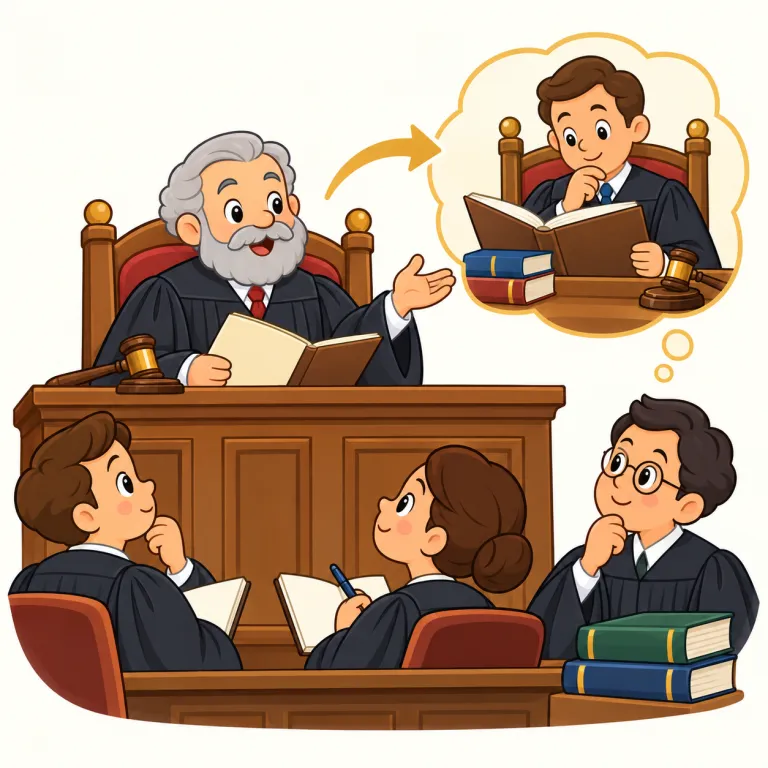
格言・判示事項
解説 Definition
権威者が述べた言葉や声明。特に法的な判示事項、一般的には名言や格言。
Dicta are comments or opinions stated by a judge that are not the main part of a legal decision. They can help explain the judge's thinking, but they are usually not as legally binding as the actual ruling.
覚え方のコツ Memory Tip
`dict-` を見たらまず「言う・述べる」系を連想する。`predict` `verdict` `contradict` などと同じ仲間に置くと、`dicta` も「述べられたことば」として覚えやすい。特に法文脈では、裁判官や権威者の言明のまとまりを指す語。`a dictum / dicta` の数の変化もセットで押さえると定着しやすい。判決の中核である `holding` そのものではなく、周辺の見解や一般論を含むことがある、という使い分けまで結びつけると忘れにくい。
Focus on the root `dict`, which appears in words like `predict`, `verdict`, and `contradict`. It often connects to saying or speaking, so `dicta` can be remembered as things that were said. In legal English, it helps to remember the pair `dictum` and `dicta` together. Also link it with `holding`: not the core ruling, but extra statements around it.
例文
The judge's dicta on constitutional law influenced future rulings.
裁判官の憲法に関する判示事項は将来の判決に影響を与えた。
Obiter dicta are judicial comments not essential to the court's decision.
判決理由中の傍論は裁判所の決定に不可欠ではない司法上のコメントである。
The philosopher's dicta have been debated for generations.
哲学者の格言は何世代にもわたって議論されてきた。
dicta の類義語・関連語
紛らわしい語
dicta の語源・成り立ち Etymology
dicta は dictum の複数形で、ラテン語 dicere「言う」に由来する。原義は「言われたこと」で、dictionary や verdict も同じ語根を持つため、法の dicta が「裁判官の言葉・言明」を指すのだと腑に落ちる。
Dicta is the plural of dictum, from Latin dicere, meaning "to say." The original sense was simply "things said." In legal and formal English, it came to mean statements or remarks, especially those spoken by a judge; dictionary and verdict come from the same root.
同じレベルの語彙をもっと
外部辞書で調べる
この英単語をクイズで覚えよう