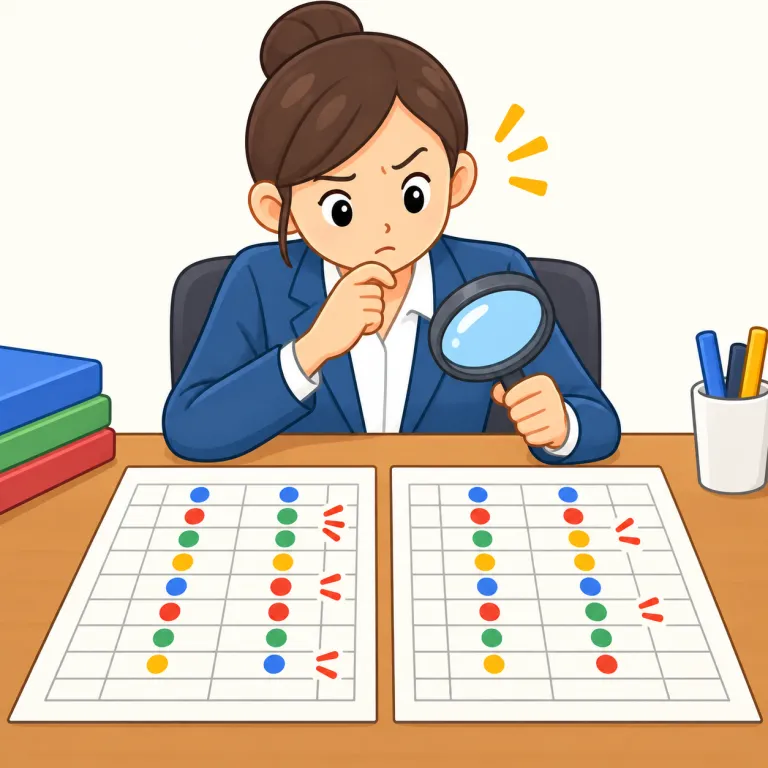
不一致
解説 Definition
discrepancies は discrepancy(不一致、食い違い)の複数形です。一致するはずの数字・記録・説明などに、合わない点が複数あることを表します。
Discrepancies are two or more differences or inconsistencies between facts, figures, records, accounts, or expectations that should agree. The word often suggests that the mismatches require checking, explanation, or correction.
使い方 Usage
- discrepancies in the records は「記録内の不一致」。in で不一致が見つかる場所や資料を示します。 Discrepancies in the records means mismatches within the records. Use in to indicate where the inconsistencies are found.
- discrepancies between A and B は「AとBの間の不一致」。between で比較する対象を示します。 Use discrepancies between A and B to identify the things being compared.
使い分け Common distinctions
- differences が広く「違い」を表すのに対し、discrepancies は一致するはずのものの食い違いを表します。 Differences can refer to any distinctions; discrepancies are mismatches between things that should agree.
覚え方のコツ Memory Tip
子音+ y で終わる discrepancy は、y を i に変えて -es を付けると discrepancies。one discrepancy と several discrepancies を対で覚えましょう。
Discrepancy ends in a consonant plus y, so change y to i and add -es: discrepancies. Learn one discrepancy and several discrepancies as a pair.
例文
The accountant found several discrepancies in the records.
会計担当者は記録の中にいくつかの不一致を見つけました。
We need to explain the discrepancies between the two reports.
私たちは二つの報告書の不一致を説明する必要があります。
Small discrepancies in the data can affect the final result.
データの小さな不一致が最終結果に影響することがあります。
discrepancies の類義語・関連語
discrepancies の語源・成り立ち Etymology
ラテン語「discrepantia」に由来し、dis-(離れて)+crepare(音を立てる)が語根。元は「音が調和しない」意味から「食い違い」へ転じた。関連語:discrepant(矛盾した)、decrepit(老朽化した、同じcrepareから)。音の不協和が意見や数値の不一致を表すようになった比喩的変化が興味深い。
Discrepancies is the plural of discrepancy, formed by changing final y to i and adding -es. Discrepancy came through Latin discrepantia from discrepare, meaning “to sound differently” or “to be inconsistent.” The verb combines dis-, conveying separation or difference, with crepare, “to make a noise.” An original image of sounds failing to agree broadened into the modern sense of conflicting facts, figures, or accounts.
同じレベルの語彙をもっと
外部辞書で調べる
この英単語をクイズで覚えよう