形成不全、発育異常
noun 名詞器官や身体部位が正常に形成・発達しない状態を指す医学用語。developmental dysplasia of the hip(発育性股関節形成不全)などに使われ、前がん性の細胞異常だけを意味する語ではない。
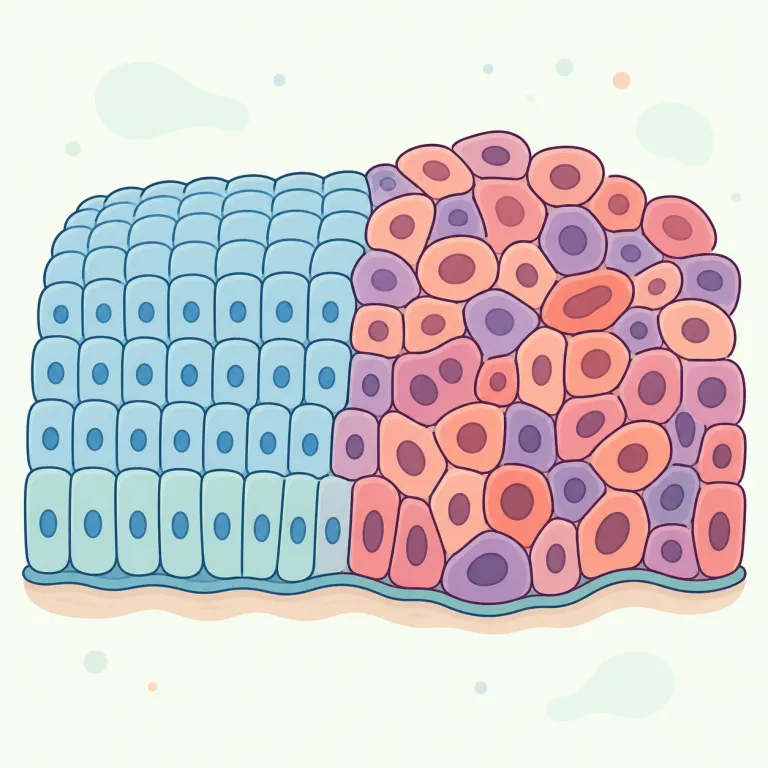
通常と異なる、不規則な細胞や組織の成長。医学用語で、がんや腫瘍の前段階を指すことが多い。
Dysplasia is an abnormal development or growth of cells, tissue, or an organ. It is mainly used in medicine, especially when doctors describe changes that are not normal and may need careful watching or treatment. The exact meaning depends on the part of the body being discussed.
まず接頭辞 dys- を dysfunction, dyslexia などの「うまくいかない・異常な」でまとめて覚えると入りやすいです。後半の -plasia は hyperplasia, neoplasia など医学語で見かける「形成・増殖」系のまとまり。つまり dysplasia は「正常に形づくられない増殖」。病気そのものというより、細胞や組織の形・並びが乱れている状態を指す語だと押さえると、cancer そのものと混同しにくくなります。
The prefix `dys-` appears in words like `dysfunction` and `dyslexia`, and it often signals something abnormal or not working well. The ending `-plasia` is a medical pattern about formation or growth, like in `hyperplasia` and `neoplasia`. So `dysplasia` is easier to remember as abnormal formation, not the same thing as cancer itself.
The biopsy revealed dysplasia in the tissues.
生検で組織の異形成が明らかになった。
Cervical dysplasia can be detected through screening.
子宮頸部異形成はスクリーニングで検出できる。
Early treatment can prevent dysplasia from progressing.
早期治療は異形成の進行を防ぐことができる。
文脈によって、次の意味でも使われます。
器官や身体部位が正常に形成・発達しない状態を指す医学用語。developmental dysplasia of the hip(発育性股関節形成不全)などに使われ、前がん性の細胞異常だけを意味する語ではない。
dysplasiaはギリシャ語dys-「悪い・異常な」とplasis「形成」から成り、「うまく形づくられないこと」が原義です。だから医学で「異形成」を表し、単なる病名でなく形の乱れに注目した語だとわかります。plasticやplasmaも同じplassein「形づくる」にさかのぼります。
`Dysplasia` comes from Greek parts: `dys-`, meaning "bad," "difficult," or "abnormal," and `plasis`, meaning "formation" or "shaping." Its basic idea is "bad formation" or "abnormal growth." The word keeps that original sense in medical use. Related English words such as `plastic` and `plasma` come from the same Greek root about shaping or forming.
この英単語をクイズで覚えよう