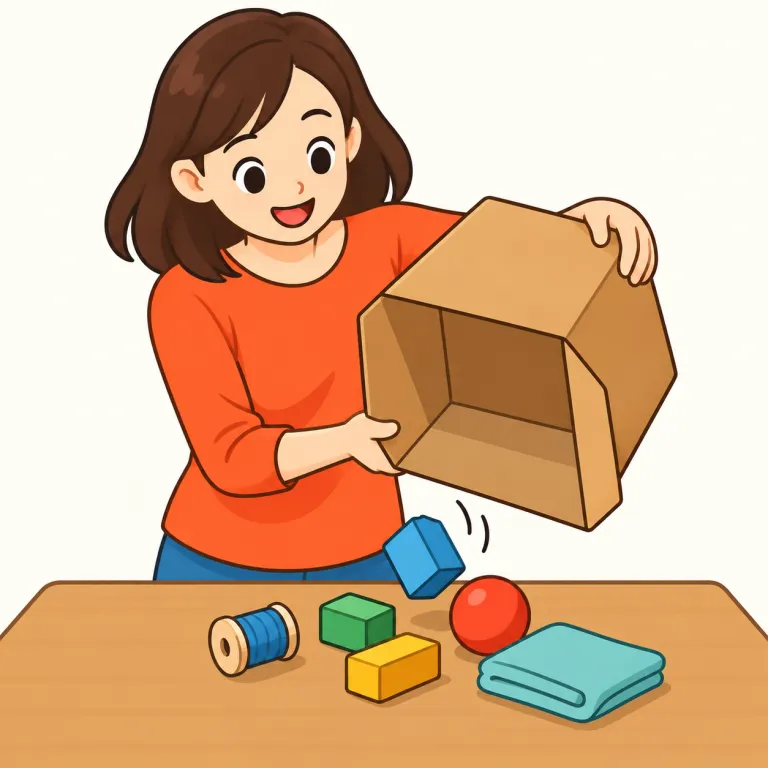
空にする
解説 Definition
emptying は empty(空にする)の現在分詞・動名詞です。容器や部屋、場所などから中身を取り除いて空の状態にすることを表します。
Emptying is the present participle or gerund of empty. It describes removing the contents of a container, room, or other place so that little or nothing remains inside, or the process of doing so.
覚え方のコツ Memory Tip
原形 empty「空にする」に -ing を付けた現在分詞・動名詞です。語末の y はそのままで emptying となり、発音は /ˈemptiɪŋ/。empty a box、empty a room、empty a tank のように、容器や場所から中身を取り除く場面と結び付けて覚えます。
Start with the verb empty, meaning “remove what is inside,” and add -ing without changing the final y: emptying, pronounced /ˈemptiɪŋ/. It can form a continuous verb, as in “She is emptying the box,” or act like a noun, as in “Emptying the tank prevents accidents.” Picture contents moving out until a box, room, or tank is left empty. Common patterns include emptying a container, emptying a storage room, and emptying something onto a surface. The key contrast is filling, which moves contents in rather than out.
例文
She is emptying the box onto the table.
彼女は箱の中身をテーブルの上に出して空にしています。
The workers spent the morning emptying the old storage room.
作業員たちは午前中、古い倉庫を空にする作業をしました。
Emptying the tank before repairs prevents leaks and accidents.
修理の前にタンクを空にしておくと、水漏れや事故を防げます。
emptying の類義語・関連語
emptying の語源・成り立ち Etymology
emptying は、動詞 empty に現在分詞・動名詞を作る -ing を付けた形です。empty は「暇な、占有されていない、中身のない」などを表した古英語 ǣmettig/ǣmǣttig にさかのぼり、後に「空にする」という動詞用法が発達しました。emptying では語末の y を変えずに -ing を付けます。
Emptying is formed in modern English by adding the participial and gerund suffix -ing to empty. Empty descends from Old English ǣmǣttig or ǣmettig, an adjective associated with being unoccupied, at leisure, or without contents. English later developed the verb meaning “to make empty.” In emptying, the final y of empty remains unchanged before -ing.
同じレベルの語彙をもっと
外部辞書で調べる
この英単語をクイズで覚えよう