内分泌の
解説 Definition
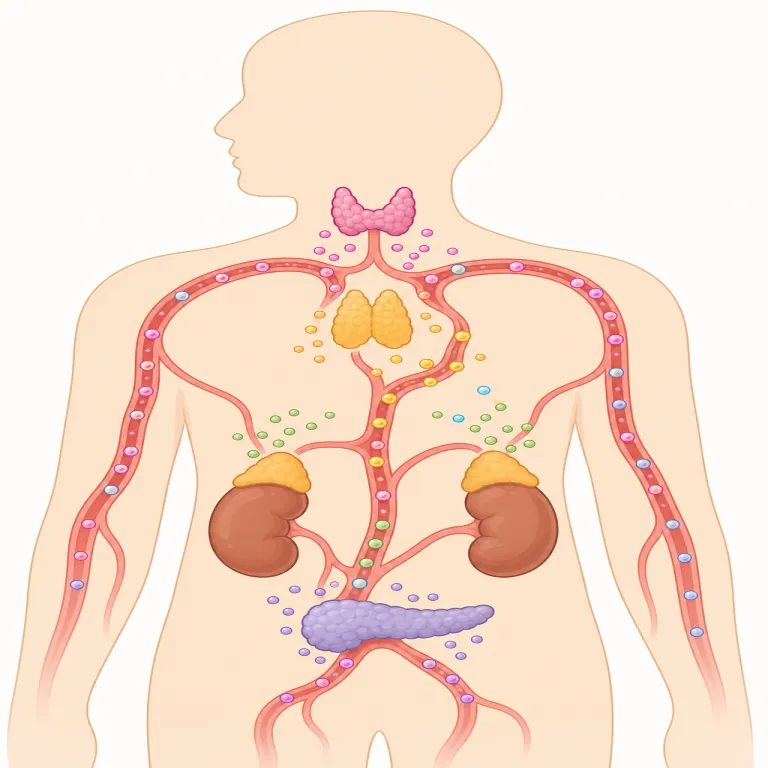
内分泌はホルモンを分泌する器官やその働きを指す専門用語です。体内のホルモンの産生・放出・調節にかかわる仕組みを説明する際の形容詞として用いられます。
Endocrine relates to glands in the body that produce hormones. These hormones control important functions such as growth, energy, and reproduction. The word is mainly used in biology and medicine.
覚え方のコツ Memory Tip
endo- は「内側」を表す接頭辞で、endoscopy(内視鏡)などにも出ます。まず endocrine は「体の内側に向けて働くもの」と押さえると残りやすいです。覚える軸は exocrine との対比で、exo- は「外へ」、endo- は「内へ」。汗や消化液のように管を通って外へ出すのが exocrine、ホルモンを血中に出して体内で作用させるのが endocrine。gland, hormone, system と一緒に出やすい語です。
The prefix `endo-` means `inside`, so use that as your main memory hook. It becomes clearer when you compare it with `exocrine`: `endo-` is inward, `exo-` is outward. Remember it with words like `hormone`, `gland`, and `system`.
例文
The endocrine system regulates hormones throughout the body.
内分泌系は体全体のホルモンを調節する。
The doctor tested the patient's endocrine function.
医師は患者の内分泌機能を検査した。
Endocrine disorders can affect metabolism and growth.
内分泌障害は代謝と成長に影響を与える可能性がある。
endocrine の類義語・関連語
endocrine の語源・成り立ち Etymology
endocrine はギリシャ語 endo-「内に」+ krinein「分ける・分泌する」から成る近代医学語です。「内へ分けて出す」がそのまま「内分泌の」となり、関連語 crisis や critic にも同じく「見分ける」という語根の感覚が残っています。
Endocrine is a modern medical word built from Greek endo-, meaning "within," and krinein, meaning "to separate" or "to secrete." The original idea is of something that releases or separates inwardly rather than outwardly. The same Greek root appears in words like crisis and critic, where it keeps the sense of distinguishing or separating.
同じレベルの英単語をもっと
外部辞書で調べる
この単語を英単語クイズで覚えよう