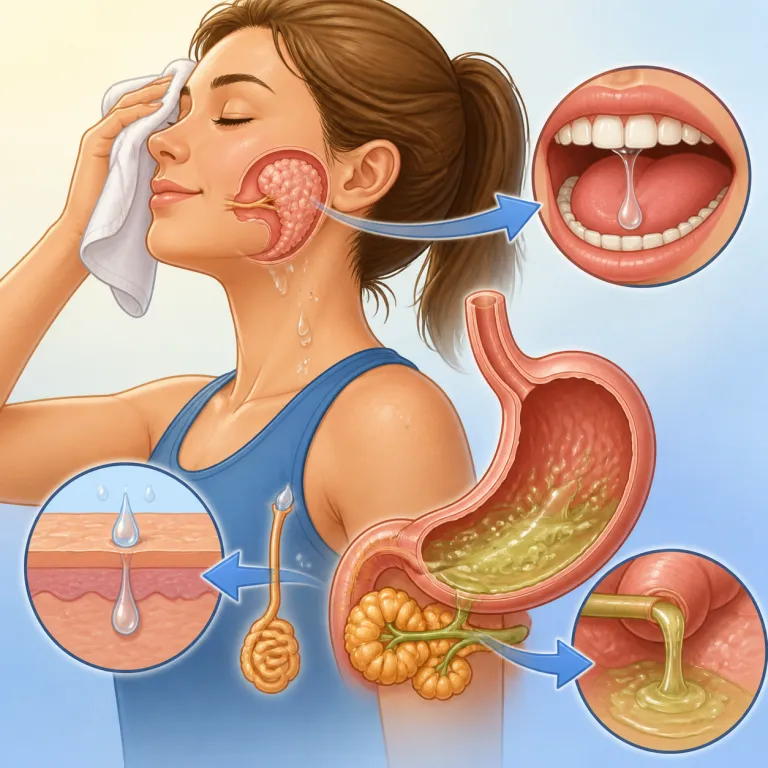
外分泌の
解説 Definition
汗腺や唾液腺、消化腺のように、分泌物を血液中ではなく体の表面や管の中へ出す働きに関する形容詞。「外分泌腺」「外分泌機能」のように、生物学や医学の文脈で用いられる。
Exocrine describes glands or body systems that send substances such as sweat, saliva, or digestive juices through tubes or ducts to another place. It is mainly used in biology and medicine. This word is often contrasted with "endocrine," which relates to hormones released into the blood.
覚え方のコツ Memory Tip
exo- は「外へ」、対になる endocrine の endo- は「内へ」とセットで覚えると定着しやすい。-crine は secretion(分泌)を表す医学語の部品なので、「外へ分泌する側」が exocrine。汗腺・唾液腺・消化腺のように、分泌物を blood に入れず duct(管)や体表へ流す場面を思い浮かべると強い。定番の形は exocrine gland / exocrine function。ホルモンを血中へ出す endocrine と逆向きだと意識すると混同しにくい。
Remember `exo-` = outside, and compare it with `endo-` in `endocrine`. `Exocrine` means the body sends something out through a duct or onto a surface, not into the blood. Learn it with `exocrine gland` and keep it as the opposite direction of `endocrine`.
例文
Exocrine glands produce sweat, saliva, and digestive juices.
外分泌腺は、汗や唾液、消化液を分泌します。
The pancreas contains both exocrine and endocrine tissue.
膵臓には、外分泌組織と内分泌組織の両方が含まれています。
Exocrine secretion helps the body function properly.
外分泌は、体が正常に機能するのを助けます。
exocrine の類義語・関連語
exocrine の語源・成り立ち Etymology
exocrine はギリシャ語 exo-「外へ」+ -crine「分ける、分泌する」から成り、「外へ分け出す」が原義です。endocrine は「内へ分泌する」対語で、criterion や crisis にも同じ krinein「分けて判断する」発想があり、分けることが意味の核だと分かります。
Exocrine comes from Greek parts meaning "outside" and "separate" or "secrete." Its older root is krinein, "to separate or judge," which also appears in words like crisis and criterion. The original sense was "secreting outward," which explains how the word developed in scientific English.
同じレベルの語彙をもっと
外部辞書で調べる
この英単語をクイズで覚えよう