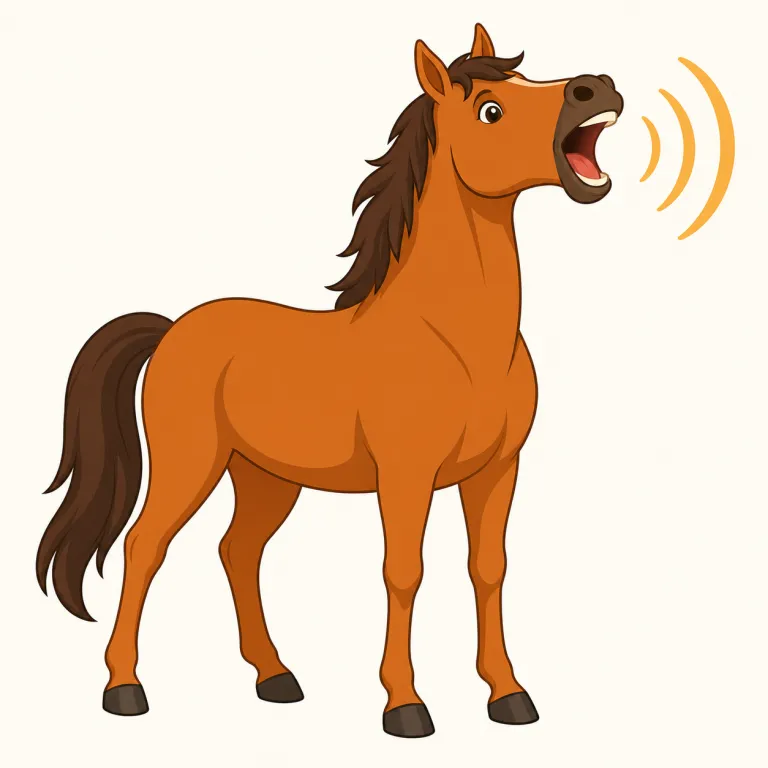
いななき
解説 Definition
馬が出す高い音声。馬が興奮したり呼びかけたりする時に発する特徴的な鳴き声。
Neighing is the loud, high sound that a horse makes. It is mainly used when talking about horses and their natural behavior. It names the sound itself, not the action of moving.
覚え方のコツ Memory Tip
まず動詞 neigh「馬がいななく」を核に置き、-ing が付いて「その鳴くこと・鳴き声」になった形だと押さえると覚えやすいです。horse と結び付けて、馬が興奮したり遠くの仲間を呼んだりする場面を思い浮かべると定着します。animal sound 系では barking や meowing と同じ作りですが、neighing はほぼ馬専用。似た horse sound に whinny もありますが、まずは「馬の典型的ないななき」と一本化して覚えるのが実用的です。
Build it from the verb `neigh` plus `-ing`. It works like `barking` or `meowing`, but almost only for horses. Picture a horse calling loudly, and the word will stay more easily.
例文
The neighing of the horses could be heard across the meadow.
馬のいななきが草原一帯に響いていた。
The young foal's neighing echoed through the stable.
子馬のいななきは厩舎中に響き渡った。
We heard the neighing of excited horses approaching.
興奮した馬のいななきが近づいてくるのが聞こえた。
neighing の類義語・関連語
派生語
neighing の語源・成り立ち Etymology
neighing は neigh「馬がいななく」+ -ing「行為」で、neigh は古英語 hnǣgan に由来する、音まね的なゲルマン系の語です。中心にあるのは説明より“あの馬の声そのもの”で、neighing が抽象語でなく生の鳴き声の名だと見えると覚えやすいです。関連語は neigh, nicker。
Neighing comes from neigh plus the noun-forming ending -ing. Neigh goes back to Old English hnagan or hnaegan and is Germanic in origin, probably formed to imitate the sound a horse makes. So the word stayed close to the actual cry itself, and neighing came to mean the act or sound of that cry. A related English word is neigh.
同じレベルの語彙をもっと
外部辞書で調べる
この英単語をクイズで覚えよう