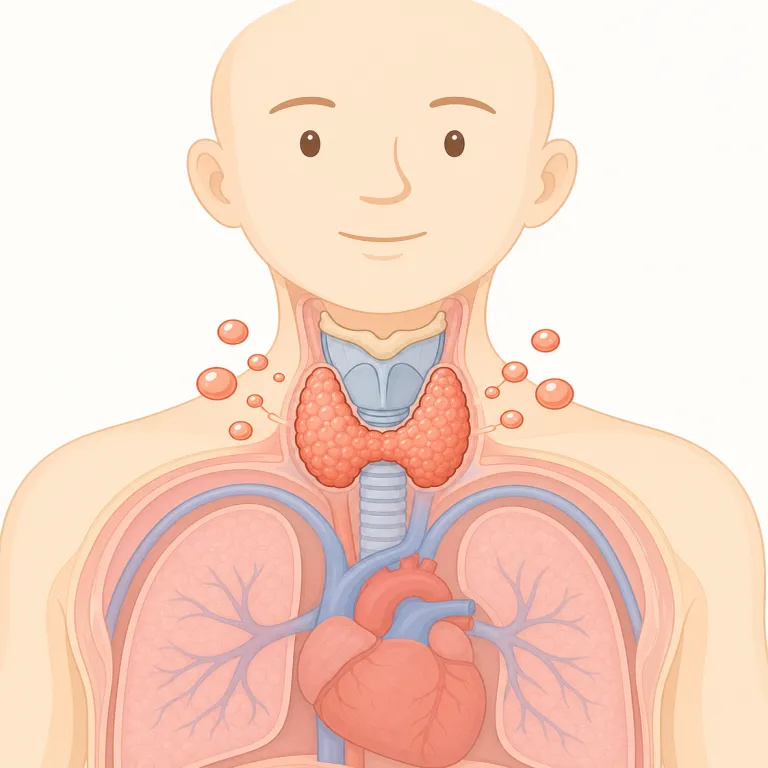
腺
解説 Definition
「gland」は「腺」という意味の名詞です。体内で特定の物質(ホルモンや消化液など)を分泌する器官を指します。汗腺、甲状腺、リンパ腺など、体の様々な部位に存在します。
A gland is an organ in the body that makes and releases substances such as hormones, sweat, or saliva. Glands help control important body functions. The word is mainly used in biology and medicine.
覚え方のコツ Memory Tip
医学語で単体よりも「○○ gland」の形で覚えると定着しやすい語です。thyroid gland(甲状腺)、adrenal gland(副腎)、sweat glands(汗腺)、salivary glands(唾液腺)のように、体内で何かを分泌する器官を指すのが共通点。organ より範囲が狭く、「出すはたらきのある器官」と結び付けると覚えやすいです。形容詞 glandular(腺の)も一緒に押さえると記憶が安定します。
Remember gland through common body phrases like thyroid gland, sweat gland, and salivary gland. A gland is a body part that produces and releases something, so that idea of giving out is the key memory hook. It is more specific than the general word organ.
例文
This gland makes hormones for the body.
この腺は体に必要なホルモンを作ります。
Sweat glands help the body cool down during exercise.
汗腺は運動中に体を冷やすのに役立つ。
The doctor found a swollen gland in his neck.
医師は彼の首に腫れた腺があるのを見つけました。
gland の類義語・関連語
gland の語源・成り立ち Etymology
gland はラテン語 glans(どんぐり)に由来し、その小形 glandula「小さな粒・腺」が古フランス語を経て英語化した語です。ふくらんだ粒状の形から「腺」になったと考えると納得しやすいです。関連語は glandular、glans。
Gland comes from Latin glans, meaning "acorn," through the diminutive form glandula, "small acorn" or "small swelling." It is related to glandular and glans. The word was applied to body organs because their rounded shape suggested a small nut or lump.
同じレベルの英単語をもっと
外部辞書で調べる
この単語を英単語クイズで覚えよう