記憶に深く刻む
verb 動詞強い体験や印象を、人の記憶や心に消えないほど深く残すことを表します。多くは be etched in one's memory や be etched on one's mind のような受け身形で使われる比喩的用法です。
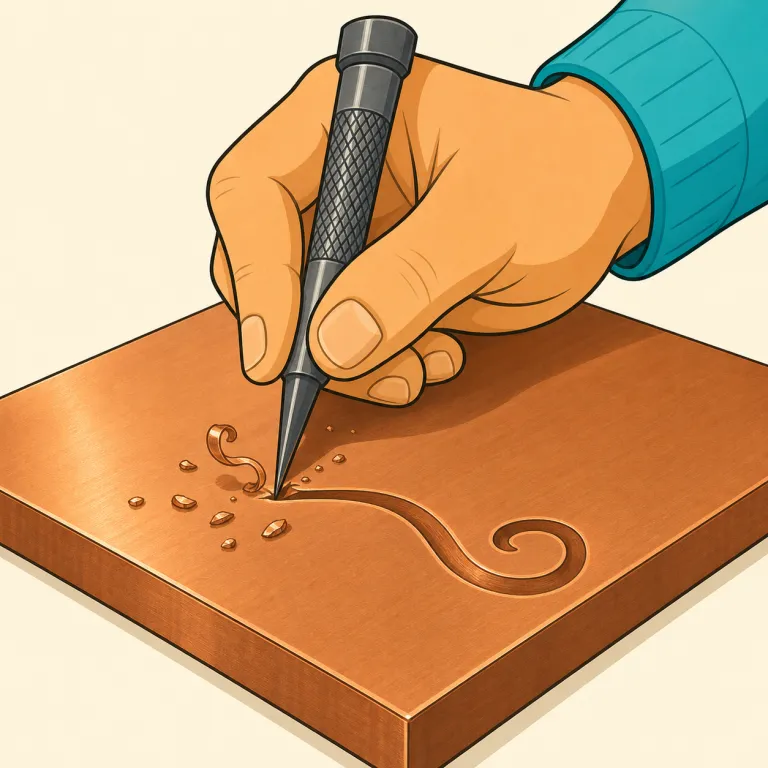
金属やガラスなどの表面に、酸や鋭い道具を使って文字や模様を刻むことをいう。
To cut letters or a design into the surface of metal, glass, or another hard material. This is usually done with acid or a sharp tool.
硬い表面に線を食い込ませ、文字や模様を残す場面を思い浮かべましょう。etch a name on glass は「ガラスに名前を刻む」、etch a pattern into metal は「金属に模様を刻み込む」です。紙に軽く書くのではなく、酸や鋭い道具で消えにくい跡を作る動作です。
The common patterns are "etch A on B" and "etch A into B." Picture a tool or acid leaving permanent lines on a hard surface.
She etched her name on the glass.
彼女はガラスに自分の名前を刻みつけた。
The artist etched a pattern into the metal.
芸術家は金属に模様を刻みつけた。
That day is etched in my memory.
あの日は私の記憶に刻まれている。
文脈によって、次の意味でも使われます。
強い体験や印象を、人の記憶や心に消えないほど深く残すことを表します。多くは be etched in one's memory や be etched on one's mind のような受け身形で使われる比喩的用法です。
etchはオランダ語etsen「酸で食い込ませて彫る」に由来し、さらにゲルマン系の「食べる」にさかのぼります。英語eatと同根で、酸が金属を「食う」ように削る発想です。だから、単なる彫刻でなく腐食で刻む感じが語源に表れています。
Etch comes from Dutch etsen, meaning to engrave with acid. It is connected with a Germanic word meaning "eat," reflecting the idea that acid eats into a surface.
この英単語をクイズで覚えよう