提唱者、擁護者
noun 名詞ある思想・理論・政策などを支持し、その価値を積極的に説明したり広めたりする人を指します。an exponent of ... の形が多く、単に賛成する人よりも公に主張する人物という含みがあります。
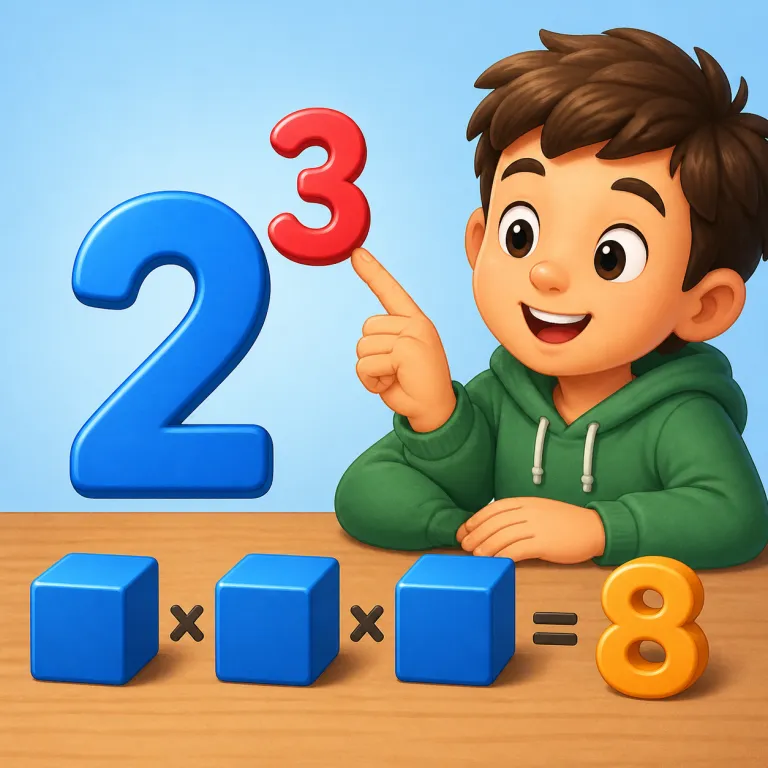
累乗において、底を因数として何個掛け合わせるかを示す数です。たとえば 2^3 では 3 が指数であり、2を3個掛け合わせて 2×2×2=8 となります。
An exponent is a number or symbol that indicates how many equal factors of the base occur in a power. In 2^3, for example, the exponent 3 means 2 × 2 × 2.
powerを「累乗」で覚えているなら、exponentはそのpowerに底を何個並べるかを指定する数字だと結びつけると残りやすい。2^3なら右上の3がexponentで、底の2を因数として3個並べる役。数式ではbase(底)とセットで見ると整理しやすい。派生語exponentialは「指数関数的な」で、exponential growthのように急増を表す頻出表現。factorやcoefficientとは役割が違う、と比べて覚えると混同しにくい。
In math, remember the small raised number in `2^3`. That raised number is the `exponent`: it tells you that the base `2` occurs as three equal factors. Keep `exponent` and `base` as a pair, and do not confuse it with a `coefficient`, which sits in front.
In the expression 2^3, 3 is the exponent.
式 2^3 では、3が指数です。
The exponent shows how many times the base appears as a factor.
指数は、底が因数として何個並ぶかを示します。
A negative exponent can represent the reciprocal of a power.
負の指数は累乗の逆数を表すことがあります。
文脈によって、次の意味でも使われます。
ある思想・理論・政策などを支持し、その価値を積極的に説明したり広めたりする人を指します。an exponent of ... の形が多く、単に賛成する人よりも公に主張する人物という含みがあります。
芸術・音楽・競技などの技法や流派を高い水準で実践し、その代表と見なされる人を指します。a leading exponent of ... の形で、特定分野に卓越した人物を紹介する際によく使われます。
exponent はラテン語 exponere「外に置く・示す」に由来し、ex-「外へ」+ ponere「置く」から成ります。もとは「説明する人・示すもの」で、数の世界では値を表に出して示す記号という感覚から「指数」になりました。関連語は expose, position。
Exponent comes from Latin exponere, meaning "to put out" or "to show," from ex- "out" and ponere "to place." It first referred to something or someone that explains or sets something forth. In mathematics, it came to mean the symbol that shows a power, keeping the older idea of making something visible or clear.
この英単語をクイズで覚えよう