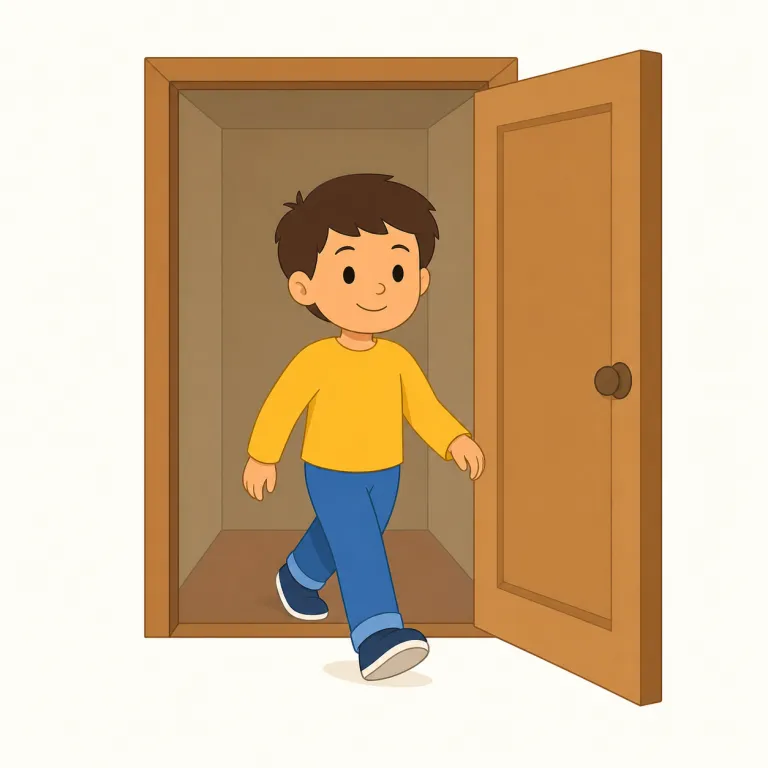
外へ
/ adjective 形容詞 外出中解説 Definition
out は基本的に「内側から外側へ」「外に出て」を表す副詞。go out, get out, find out, carry out のように多くの句動詞で使われ、単なる場所の移動だけでなく、消滅・公開・完了・発見などへ意味が広がる非常に頻度の高い語。
"Out" is an adverb that usually means moving from inside to outside or being outside. It can also mean removed, visible, available, or no longer active, depending on the context. It is often used in phrasal verbs, where the meaning may change.
覚え方のコツ Memory Tip
out はまず「内→外」だけを核に置くと広がります。go out は外へ出る、get out は外へ出ろ、put out は外へ出して消す、find out は隠れていたものが外に出て「わかる」、carry out は中にある計画を外に出して「実行する」。句動詞ごとに丸暗記するより、「外へ現れる・外へ出す」の感覚で束ねると定着しやすいです。in の反対軸として覚えると迷いにくい語です。
Keep the basic picture simple: `out` means moving from inside to outside. That image helps with many phrases, such as `go out`, `get out`, `find out`, and `carry out`. Instead of memorizing each one separately, connect them to the idea of something coming out or being brought out.
例文
Go out now.
今、外へ出なさい。
The cat runs out.
そのネコは外へ走り出る。
The dog goes out.
その犬は外へ出ます。
品切れ
(意味 2)解説 Definition
物がもう残っていない、使える分が尽きている状態を表します。店の商品、食料、インク、電池など、在庫や中身がなくなった場面で広く使われます。
覚え方のコツ Memory Tip
out は「中にあったものが外へ出て、もう中に残っていない」と考えると品切れに直結します。We're out of milk. は、牛乳が家の中・手元の在庫から出て行って空になった状態。go out のように人が外へ出る用法とは違い、この行では商品や中身が尽きて「ない」ことを表す形容詞的な out です。out of batteries も「電池の在庫が外へ出きった」と覚えると自然です。
例文
We're out of milk.
牛乳を切らしています。
The store is out of batteries.
その店は電池が品切れです。
My pen is out of ink.
私のペンはインクが切れています。
消えた
(意味 3)解説 Definition
火や明かりがついておらず、燃焼や点灯が止まった状態を表します。lights are out や the fire is out のように、光源や火が消失した場面で使われます。
例文
The lights are out in the kitchen.
台所の明かりが消えています。
The fire was out by morning.
朝までには火が消えていました。
All the candles were out by midnight.
真夜中までにろうそくは全部消えていました。
out の類義語・関連語
out を含む表現
句動詞・イディオムなど 32 件。クリックで各表現の詳細へ。
- go out 外出する L5
- go out 消える L5
- go out 付き合う L5
- out of use 廃れた L5
- out of nowhere どこからともなく L7
- out of order 故障中 L7
- out of order 順番違い L7
- out of order 不適切 L7
- out of bounds 立ち入り禁止で L8
- out of date 時代遅れ L11
- out of date 期限切れ L11
- out of date 最新でない L11
- out of the blue 突然に L11
- out of stock 品切れ L12
- out of breath 息切れして L13
- out of place 場違い L13
- out of place 定位置にない L13
- out of use 使用中止 L13
- out in the cold 仲間外れ L14
- out of the woods 危機や困難を脱して L14
- i'm out of money お金がない L16
- i'm out of money お金が尽きた L16
- out of nowhere 突然 L16
- out and about 外出中 L17
- out and about 回復して出歩ける L17
- out of the ordinary 普通と違う L17
- out of the picture 関係がなくなる L18
- out of the picture 無関係 L18
- out of the picture もういない L18
- out of the question 問題外で L18
- out of hand 手に負えなくなって、即座に L20
- out of bounds 場外 L22
out の語源・成り立ち Etymology
古英語 ūt に由来し、もともとは「外へ、外側に」を意味した。ゲルマン系の古い語で、outer, outside, outdoors など「外」のイメージをもつ関連語の中心となる基本語である。
Out comes from Old English ut, which originally meant "outward" or "to the outside." It is an old Germanic word and has kept that central image of moving beyond a boundary. Related English words include outer, outside, and outdoors.
同じレベルの英単語をもっと
英検7級の一覧へ →外部辞書で調べる
この単語を英単語クイズで覚えよう