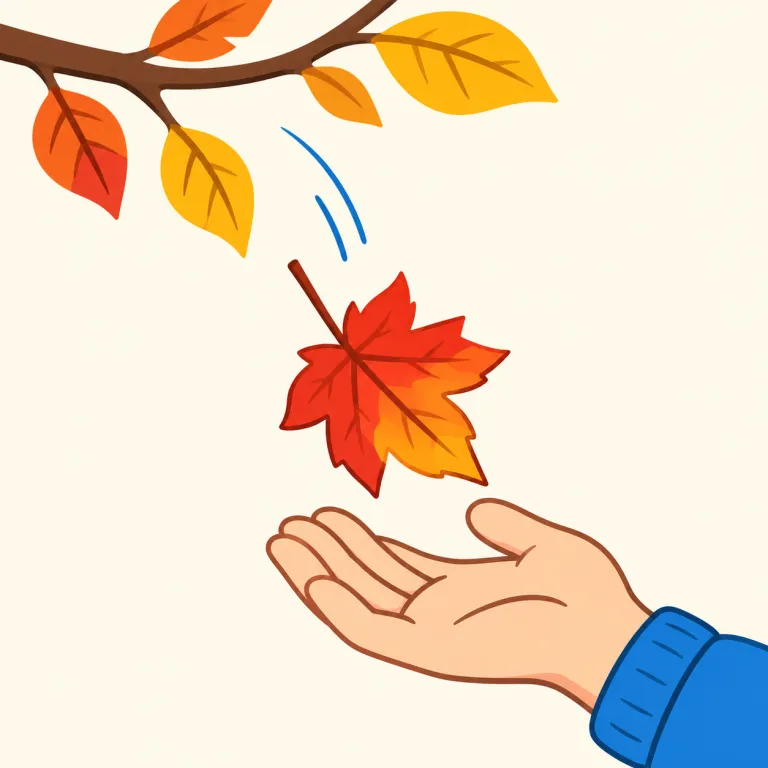
落ちる
解説 Definition
falling は fall(落ちる、倒れる)の現在分詞で、形容詞としては「落ちている」「下がっている」という意味です。物が下へ動いている様子や、数値が低くなっている状態に使われます。
Falling describes something that is moving downward or becoming lower in amount, level, or value. It is the present-participle form of fall used adjectivally, so it commonly presents the downward movement or decrease as ongoing rather than completed.
覚え方のコツ Memory Tip
falling は原形 fall に -ing を付けた現在分詞で、fall は末尾の l を重ねず falling となります。形容詞では a falling leaf「落ちてくる葉」、falling snow「降る雪」、falling prices「下落中の価格」のように、下向きの動きや減少の途中を表します。fallen が「すでに落ちた」という完了状態を示す点と区別しましょう。
Falling is formed from the base verb fall plus -ing; no extra l is added, so the spelling is falling. Keep the central picture of downward movement: a falling leaf moves toward the ground, falling snow comes down through the air, and falling prices become lower. This form often works before a noun as an adjective and presents the change as ongoing. Contrast it with fallen: a falling leaf is still descending, while a fallen leaf is already on the ground. That ongoing-versus-completed distinction makes the two forms easier to use accurately.
例文
A falling leaf touched my hand.
落ちてくる葉が私の手に触れました。
The falling snow looked beautiful.
降ってくる雪は美しく見えました。
The falling price helped many families.
価格の下落は多くの家庭の助けになりました。
falling の類義語・関連語
falling の語源・成り立ち Etymology
falling は動詞 fall の現在分詞が形容詞化した語で、fall は古英語 feallan、さらにゲルマン祖語を経て印欧祖語 *pol-「落ちる」にさかのぼります。だから「落下している」「下降する」という動きそのものを表し、関連語に fallen、befall があります。
Falling is the present participle of fall, formed by adding -ing, and it later developed regular adjectival uses. Fall comes from Old English feallan, “to fall or drop,” and has cognates in other Germanic languages. Its deeper ancestry is commonly connected with an Indo-European root meaning “to fall.” The modern form preserves the core downward-motion sense, which extends figuratively to falling temperatures, prices, numbers, and levels.
同じレベルの語彙をもっと
外部辞書で調べる
この英単語をクイズで覚えよう