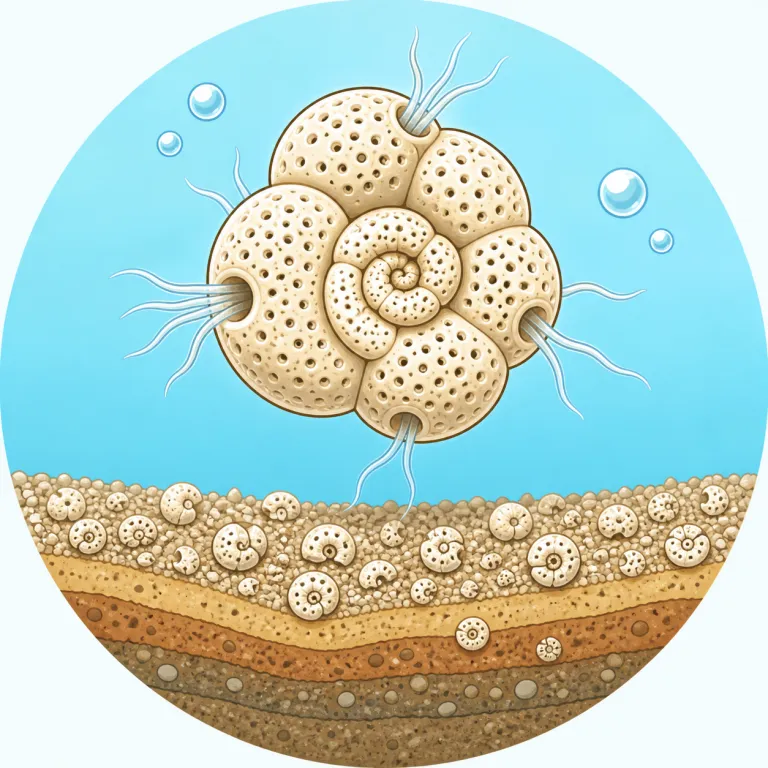
有孔虫
解説 Definition
有孔虫は海中に住む単細胞生物です。石灰質の殻を持つ微視的な原生動物で、化石燃料や地層研究に重要です。
Foraminifera is the scientific name for a group of very small sea organisms, usually with shells. They live in the ocean and are often studied in biology and geology because their shells can become fossils. This word is mainly used in scientific contexts.
覚え方のコツ Memory Tip
日常語として覚えるより、理科・地学の専門語としてひとかたまりで覚えるのが近道です。語尾の -a はラテン語系で「分類群・複数っぽい名前」によく見えるので、生物名らしさの目印になります。核になるイメージは「海にいる、殻に細かい孔がある、微化石として地層研究に出る小さな生物」。foraminal / foramen を見たことがあれば「開口部・孔」の連想でつなげると定着しやすいです。amoeba のような漠然とした原生生物ではなく、「孔のある殻をもつ有孔虫」という限定された像で覚えると混同しにくくなります。
Treat this as a science word you remember as one whole unit. The useful image is very specific: tiny sea organisms with shells full of small holes, often studied as microfossils. If you know `foramen` or `foraminal`, use the link to "opening" or "hole" to anchor the word.
例文
The shells of foraminifera form much of the ocean's sediment.
有孔虫の殻は海の堆積物の多くを形成しています。
Scientists study tiny marine organisms called foraminifera to understand past climates.
科学者は過去の気候を理解するため、有孔虫という海の微小生物を研究しています。
Foraminifera fossils are important for dating geological layers.
有孔虫の化石は、地層の年代を決めるうえで重要です。
foraminifera の語源・成り立ち Etymology
foraminifera は現代ラテン語で、foramen「穴」+ -fer「運ぶ・備える」+ 複数語尾 -a から成り、「穴をもつものたち」という意味。同根語に foraminal と conifer がある。殻に小孔が並ぶ見た目が、そのまま生物名になった。
Foraminifera comes from modern Latin and means roughly "things that bear holes." It is built from Latin foramen, meaning "hole," plus -fer, meaning "bearing," and the plural ending -a. The name was given because these organisms have shells with many tiny openings. A related English word is foraminal, and conifer shares the same -fer element.
同じレベルの語彙をもっと
外部辞書で調べる
この英単語をクイズで覚えよう