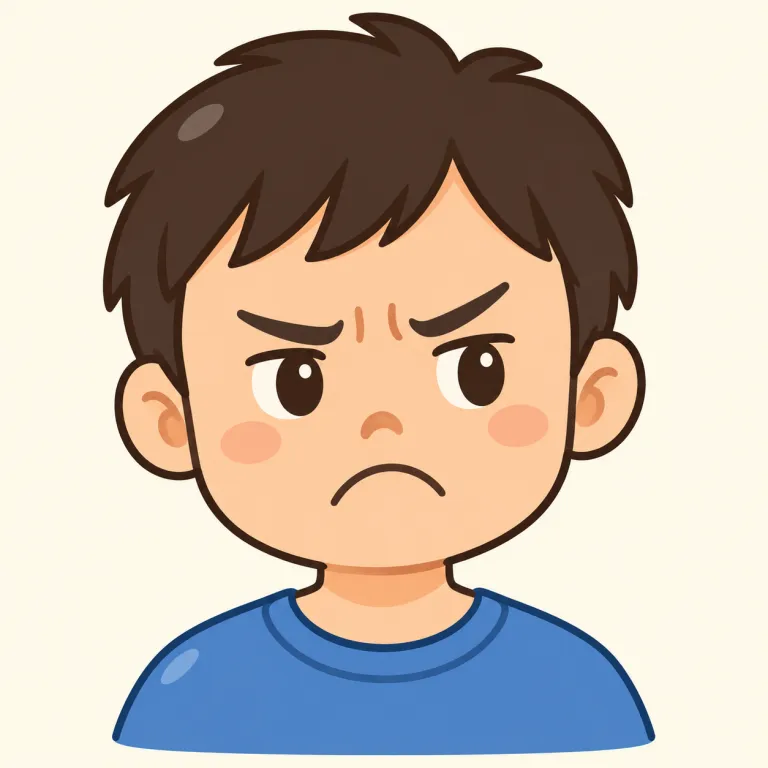
しかめっ面
解説 Definition
frowning は frown(眉をひそめる、しかめっ面をする)の現在分詞・動名詞です。不満・心配・集中などで顔をしかめている様子や、その表情を表します。
Frowning is the act or state of drawing the eyebrows together and changing the expression of the face, often because of displeasure, worry, confusion, or concentration. It can also describe someone who is making such an expression.
覚え方のコツ Memory Tip
原形は frown「眉をひそめる」で、語末に -ing を付けた現在分詞・動名詞です。短母音の後でも n を重ねず frowning となり、発音は「フラウニング」に近い形です。frowning face「しかめっ面」、frown at ~「~に難色を示す」を、不満・心配・集中で眉が寄る場面と結びつけて覚えます。
Connect frowning directly with the base verb frown, meaning to draw your eyebrows together. The form is made by adding -ing without doubling the final n: frown becomes frowning. Picture a person reading a difficult or unwelcome email and forming a frowning face. Useful patterns include frown at a proposal and notice someone frowning. Unlike smiling, frowning usually signals displeasure, concern, confusion, or intense concentration, although the exact feeling depends on the situation.
例文
His frowning face made the room feel tense.
彼のしかめっ面で、部屋の空気が張りつめました。
She was frowning while reading the difficult email.
彼女は難しいメールを読みながらしかめっ面をしていました。
The manager noticed Tom frowning at the new budget plan.
部長はトムが新しい予算案にしかめっ面をしているのに気づきました。
frowning の類義語・関連語
frowning の語源・成り立ち Etymology
frown は古フランス語 frognier「鼻を鳴らす、しかめる」にさかのぼり、さらにケルト系の「鼻・鼻孔」を表す語と結びつけられます。-ing は動作や状態を名詞化する語尾で、鼻や眉をぎゅっと寄せるしぐさがそのまま「しかめっ面」になったと考えると理解しやすいです。同系に仏語 refrogner があります。
Frowning is the -ing form of frown. The verb entered English through Old French, associated with forms such as frognier, meaning to grimace or express displeasure with the face. Its deeper history has been connected with Celtic words referring to the nose or nostrils, though the details are not fully certain. The suffix -ing turns the action or continuing state of frowning into a participial or gerund form.
同じレベルの語彙をもっと
外部辞書で調べる
この英単語をクイズで覚えよう