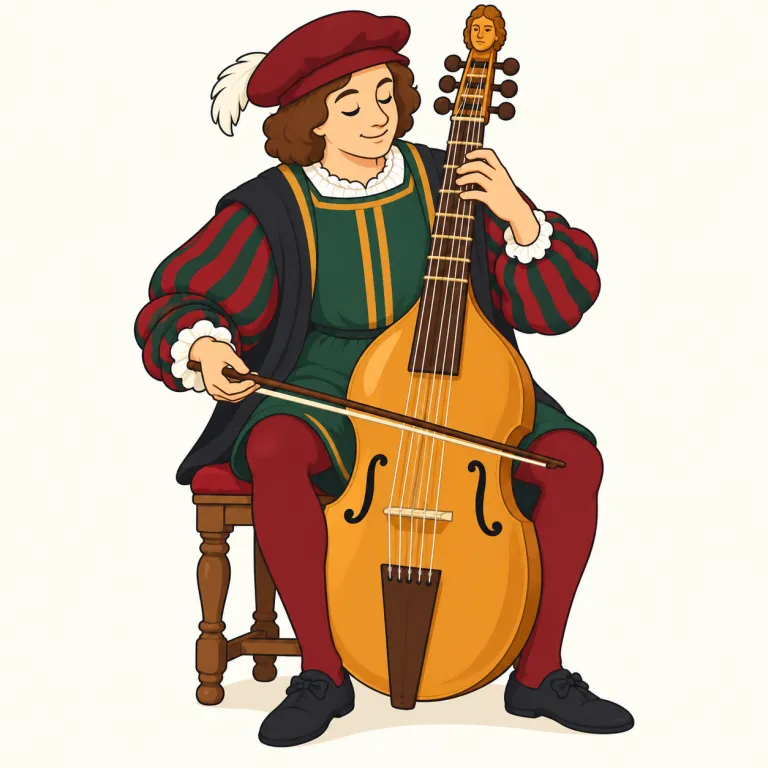
ガンバ
解説 Definition
ビオール族に属する弦楽器。中世からバロック時代に使用され、複数の弦とフレットを備えている。
A viol-family stringed instrument, especially the viola da gamba, played in Europe from the Renaissance through the Baroque period. It typically has several strings, frets, and a soft, warm tone, and was made in different sizes and registers.
覚え方のコツ Memory Tip
gambaはイタリア語で「脚」。viola da gambaは脚の間や脚元に構えて弾く「脚のヴィオラ」なので、短くgambaとも呼ばれる。フレットと複数の弦を持つビオール族で、現代のcelloに似た姿でも別系統の楽器だと区別する。
Start with Italian gamba, meaning “leg.” A viola da gamba is literally a “viol of the leg,” named for the way it is held at or between the player’s legs; gamba then serves as a shorter instrument name. Picture a Renaissance chamber ensemble and notice the instrument’s fretted neck, multiple strings, and mellow sound. Although a bass gamba may resemble a cello, it belongs to the viol family and differs in construction, tuning, bow hold, and historical playing practice.
例文
The viol da gamba produces a warm, mellow tone.
ビオラ・ダ・ガンバは温かみのある柔らかな音色を産出します。
Renaissance musicians often played the gamba in chamber ensembles.
ルネッサンス時代の音楽家はしばしば室内楽アンサンブルでガンバを演奏しました。
The gamba family includes instruments of various sizes and registers.
ガンバ族には様々なサイズと音域の楽器が含まれています。
gamba の類義語・関連語
gamba の語源・成り立ち Etymology
イタリア語 gamba(脚)に由来し、後期ラテン語 gamba(脚)、さらにギリシャ語 kampē(曲がり・関節)に遡る。楽器名 viola da gamba(脚のヴィオラ)やチェスの gambit(元は「足を引っかける」意)と同根。「脚」が原義で、サッカーチーム名等にも使われる。
Gamba is Italian for “leg” and comes through Late Latin gamba, a word associated with the leg or joint and often connected with Greek kampē, “a bend.” The instrument name is shortened from viola da gamba, literally “viol of the leg,” referring to its playing position. Gambit is historically related through Italian gambetto, originally a tripping action involving the leg, although its modern meaning developed in chess and figurative use.
同じレベルの語彙をもっと
外部辞書で調べる
この英単語をクイズで覚えよう