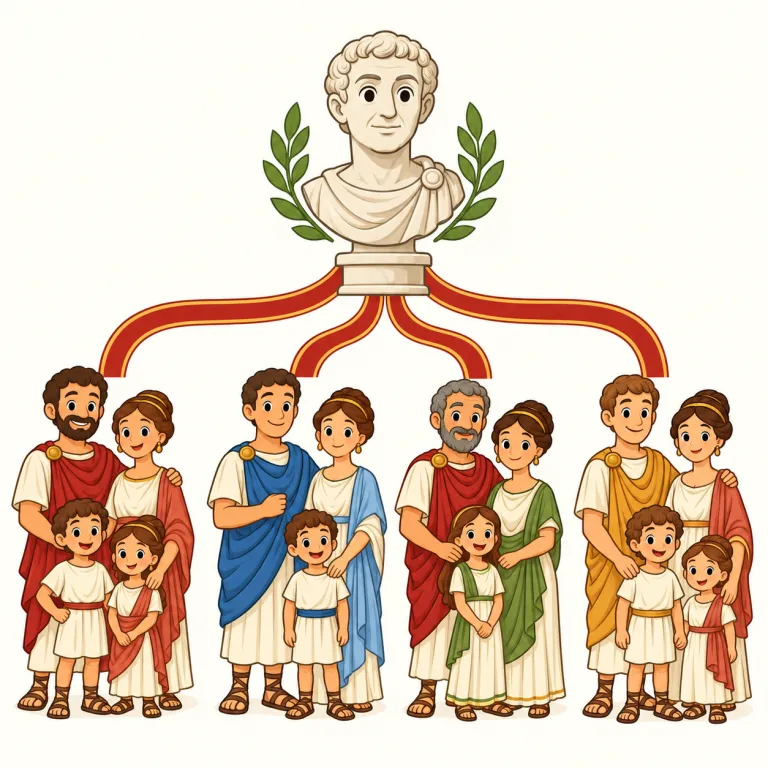
氏族、一族
解説 Definition
共通の祖先を持つと考えられる氏族・血族集団。特に、古代ローマで共通の氏族名と祖先を共有するとされた一族を指す。
A gens is a clan or kinship group whose members are regarded as descending from a common ancestor, especially such a group in ancient Roman society. The term emphasizes shared descent and lineage rather than merely people of the same age or generation.
覚え方のコツ Memory Tip
gens はラテン語から入った歴史・人類学上の名詞で、「同じ祖先から生まれた一族・氏族」が中心です。日本語の「世代」と結び付ける場合も、単なる同年代ではなく、印欧語根 gen-「生む」から子孫へ続くまとまりを意識しましょう。gene、generation、genus と同じ「出生・系統」の核を持ち、古代ローマの氏族を述べる場面が典型です。
Connect gens with the familiar words gene and generation. All point back to the central idea of birth, origin, or descent. In historical writing, picture an ancient Roman clan whose families claim a common ancestor and share a group name. That image captures gens more accurately than simply imagining people of the same age. The word can help explain a succession of descendants across generations, but its direct meaning is a lineage-based group. Also remember that gens is singular in this Latin-derived use; its traditional plural is gentes, a form mainly encountered in specialized historical or anthropological contexts.
例文
Each Roman gens consisted of families that claimed descent from a common ancestor.
ローマの各氏族は、共通の祖先の子孫だと称する複数の家族から成っていました。
Members of the gens shared a common clan name.
その氏族の構成員は共通の氏族名を持っていました。
gens の類義語・関連語
類義語
派生語
gens の語源・成り立ち Etymology
英語の gens は、ラテン語で「氏族・一族・民族」を意味する gens に由来します。さらに「生む・生じる」という概念を表す印欧語根にさかのぼり、gene、generation、genus などと歴史的に関連します。ただし、gens 自体は「世代」ではなく、共通の血統によって結ばれる集団を指します。
English borrowed gens directly from Latin gens, meaning a race, clan, people, or body connected by birth. It is related to Latin gignere, “to beget,” and ultimately to the Indo-European root commonly represented as gen-, “to give birth or produce.” The same broad root appears in gene, generation, genus, and progeny. In Roman usage, a gens comprised families understood to share ancestry and a common clan name, which explains the word’s emphasis on descent.
同じレベルの語彙をもっと
外部辞書で調べる
この英単語をクイズで覚えよう