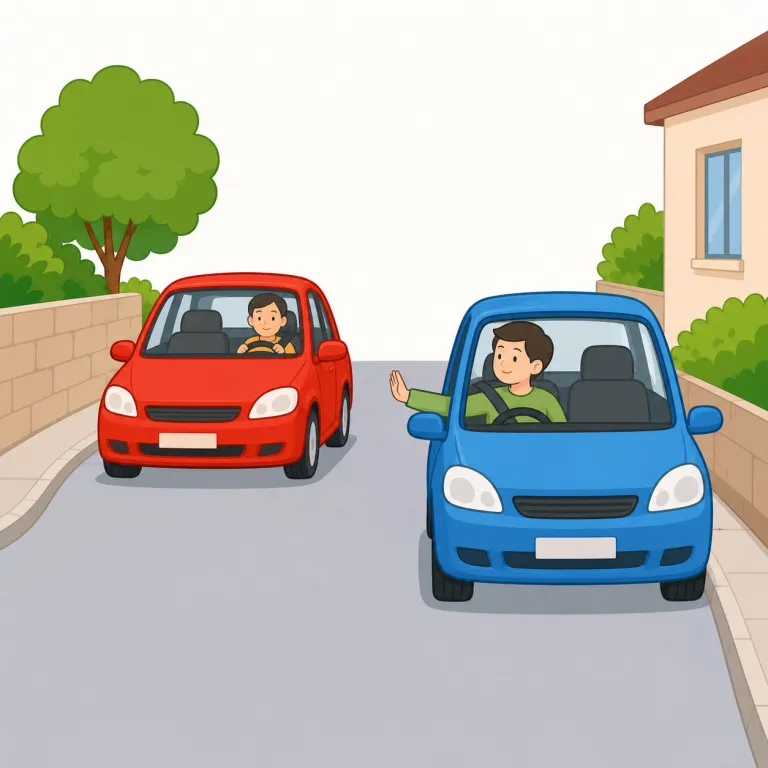
give way
give way は英検準1級レベルの英熟語で、「道を譲る、崩れる、屈する」という意味があります。発音記号は /ˈɡɪv ˈweɪ/ です。
道を譲る
解説 Definition
「give way」は「道を譲る」や「圧力に負けて崩れる」など、状況に屈することを表すフレーズ。物理的な力に対して折れてしまう場合もあれば、人に自分の席や地位を譲る場面でも使う。感情に押されて態度を変える意味でも使う。
Give way means to let another person or vehicle go first. It is commonly used in traffic, driving, and formal rules about movement. In British English, it often appears on road signs.
覚え方のコツ Memory Tip
"give"は「与える」だけでなく「譲る」でも使えると押さえると覚えやすいです。核のイメージは「相手にway(進む余地・通り道)を与える」なので、まずは車で道を譲る場面で固定するとよいです。そこから意味が広がって、pressureやemotionに押されて「持ちこたえられず譲る・崩れる」にもつながります。give upが自分からあきらめるのに対し、give wayは外からの力で譲歩・屈服する感じ。頻出はgive way to traffic, give way under pressure。
Break it into `give` + `way`: you give someone space to move. That makes `give way to traffic` easy to remember in road situations. From there, the meaning also extends to giving in under pressure, as in something that cannot hold any longer.
例文
Cars gave way to the ambulance on the narrow street.
狭い通りで車が救急車に道を譲った。
The old bridge gave way under the heavy truck.
その老朽化した橋は大型トラックの重さに耐えきれず崩れた。
At this crossing, drivers must give way to pedestrians.
この横断歩道では、運転者は歩行者に道を譲らなければならない。
崩れる
(意味 2)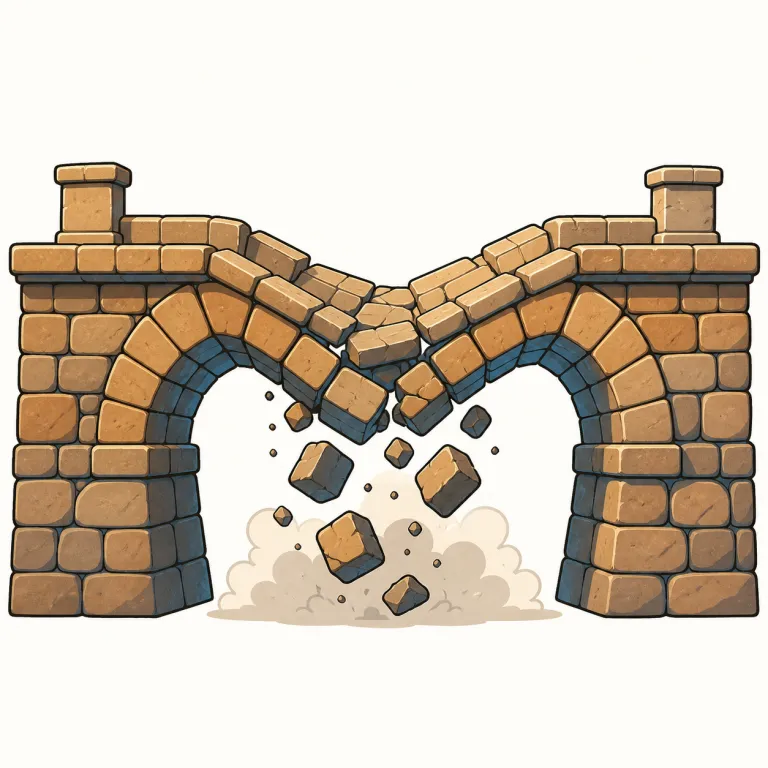
解説 Definition
建物や橋、床などが重みや老朽化に耐えられず壊れたり、支えがきかなくなったりするときに使う。物理的な破損のほか、脚や膝が急に弱って持ちこたえられなくなる場面にもよく用いられる。
This phrasal verb describes a structure or body part becoming unable to support weight or resist force and suddenly breaking, collapsing, or failing. It is often used for bridges, floors, shelves, knees, or legs.
覚え方のコツ Memory Tip
"give"は「与える」だけでなく「譲る」でも使えると押さえると覚えやすいです。核のイメージは、橋や棚が重さに押されてそれ以上こらえず、支えを「譲ってしまう」こと。車で道を譲る give way と同じ語ですが、この行では人ではなく物が pressure や weight に負けて「崩れる」と考えると切り分けやすいです。give up が自分からあきらめるのに対し、give way は外からの力で持ちこたえられなくなる感じ。頻出はgive way under the weight, give way under pressure。
Picture a bridge that can no longer resist a heavy load and finally gives its support away. In this sense, give way suggests failing under outside weight or pressure, rather than choosing to give up. Remember the common pattern give way under the weight.
例文
The old wooden bridge finally gave way under the truck.
古い木の橋はトラックの重みでついに崩れた。
One of the shelves gave way and all the books fell to the floor.
棚の一つが崩れて、本が全部床に落ちた。
Her knees gave way when she heard the shocking news.
その衝撃的な知らせを聞いて、彼女は膝から崩れ落ちた。
屈する
(意味 3)
解説 Definition
反対や圧力、要求に抵抗していた人が、最後にはそれを受け入れる場合に使う。議論や交渉、感情の葛藤などで、自分の立場を保てず譲歩するという含みがある。
This phrasal verb means yielding to pressure, demands, an argument, circumstances, or emotions after resisting. The yielding may be complete or may involve conceding only part of one's position.
例文
After hours of debate, he finally gave way and accepted the plan.
何時間も議論した末に、彼はついに屈してその案を受け入れた。
She refused to give way to pressure from her competitors.
彼女は競争相手からの圧力に屈することを拒んだ。
The committee gave way on several points during the negotiations.
委員会は交渉の中でいくつかの点で譲歩した。
give way の類義語・関連語
give way の語源・成り立ち Etymology
give way は give と way から成り、give は古英語 giefan「与える・譲る」、way は古英語 weg「道」に由来します。直訳は「道を与える」で、そこから相手を先に通す「道を譲る」となり、forgive や roadway が縁のある語です。
"Give way" is made from Old English "giefan" meaning give, and "weg" meaning road or path. The literal sense was to give someone a path to pass through. From there, it developed into the ideas of yielding, stepping aside, or letting something else happen. Related words include "forgive" and "roadway."
同じレベルの語彙をもっと
英検準1級の一覧へ →外部辞書で調べる
この英熟語をクイズで覚えよう