甘ったるい感傷、感傷的なたわ言
noun 名詞不可算名詞として、過度に甘ったるい感傷や、感傷的で中身の乏しい言葉・作品をくだけて批判的に指す。sentimental goo などの形で使われ、物理的な粘液ではなく比喩的な「べたべたした感傷」を表す。
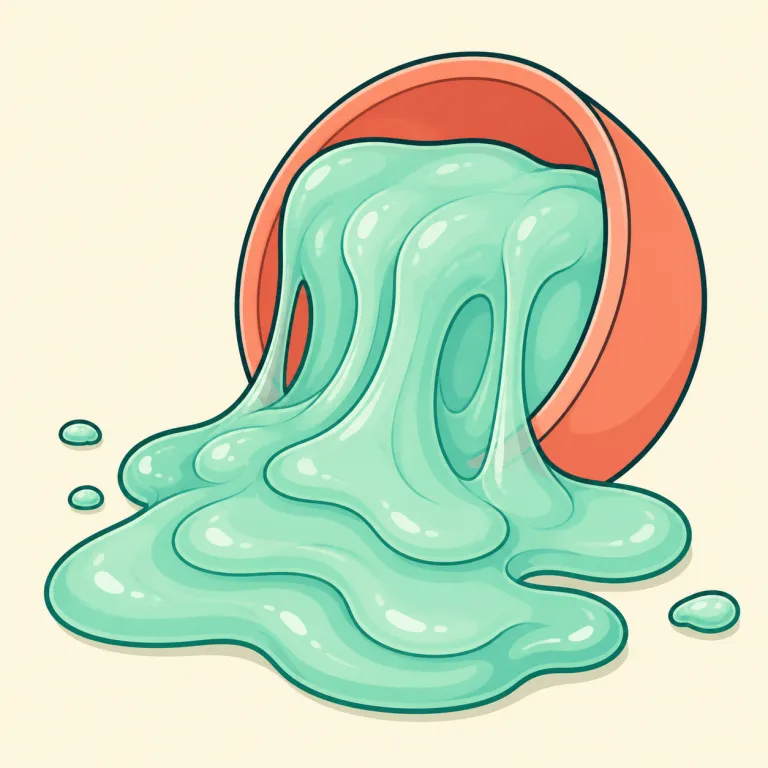
グーとは、粘着性のある半液体状のどろどろした物質を指す俗語です。正式な名称のない粘り気のある不快な物質を表す際によく使われます。子どもの遊び道具としての「スライム」のような物質を指すこともあります。
An informal term for an unpleasant or unidentified substance that is thick, wet, and sticky. It can also refer to a slime-like material used as a children's toy.
goo は、正体や正式名を言うほどでもない「ねばねば、どろどろしたもの」をくだけて呼ぶ語です。靴の裏に得体の知れない粘着物が付き、糸を引いている場面を固定すると覚えやすいでしょう。液体そのものよりも粘りがあり、mud「泥」や glue「接着剤」のように種類が明確とは限らない点がポイントです。基本的に数えない名詞で、some sticky goo「何かねばねばしたもの」の形が自然。形容詞 gooey「ねばねばした」も一緒に覚えると、gooey candy や gooey substance に応用できます。
Picture an unknown sticky substance stretching from the bottom of your shoe. Goo is usually uncountable, so "some sticky goo" is more natural than "a goo"; the related adjective is "gooey."
There was some sticky goo on the bottom of my shoe.
靴の底にべたべたしたものがついていた。
The kids made colorful goo and played with it at school.
子どもたちは学校で色とりどりのねばねばしたものを作って遊んだ。
She accidentally stepped in a puddle of goo and grimaced.
彼女は誤ってどろどろした水たまりに踏み込んでしまい、顔をしかめた。
文脈によって、次の意味でも使われます。
不可算名詞として、過度に甘ったるい感傷や、感傷的で中身の乏しい言葉・作品をくだけて批判的に指す。sentimental goo などの形で使われ、物理的な粘液ではなく比喩的な「べたべたした感傷」を表す。
20世紀初頭のアメリカ英語スラングで、起源は不確定だが、burgoo(粥状の食べ物)の短縮形とする説が有力。粘り気のある不快な物質を指す擬態的な響きを持つ。関連語: gooey(ねばねばした)、goop(どろどろしたもの)。
This term arose in early twentieth-century American slang. Its origin is uncertain; one proposed explanation is that it was shortened from burgoo, a word for a porridge-like food.
この英単語をクイズで覚えよう