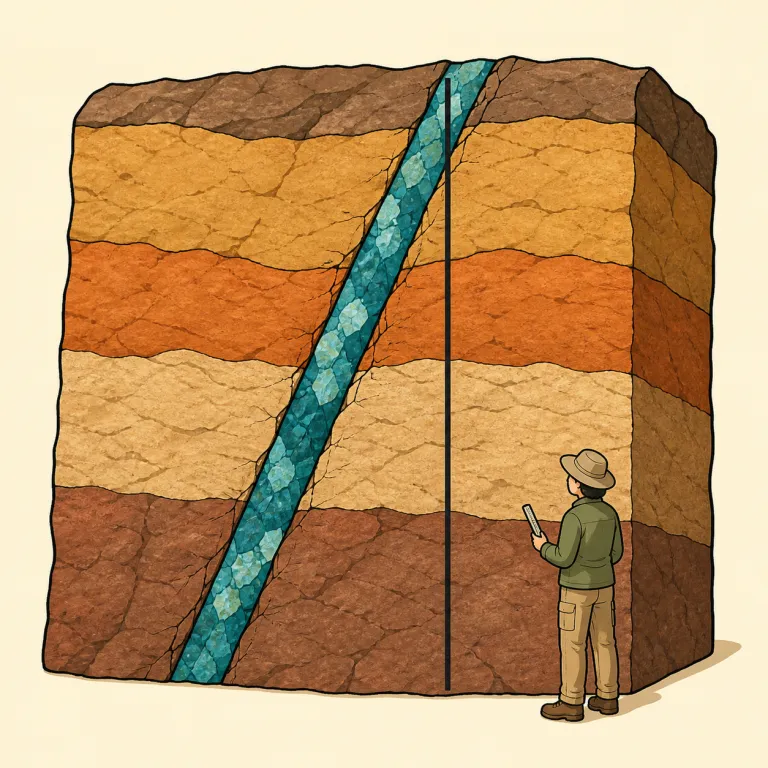
断層の傾き
解説 Definition
鉱脈や断層が鉛直線からなす傾きの角度。地質学用語で、採鉱時の掘削方向や深さを決定するのに用いられる。
Hade is the angle or slope of a rock layer, vein, or fault away from the vertical line. It is used in geology, mining, and related technical fields. This is a specialized word and is rarely used in everyday English.
覚え方のコツ Memory Tip
地質の角度語は『何を基準に測るか』で整理すると覚えやすい。似た語の dip は地層などが horizontal(水平)からどれだけ傾くかを見るのに対し、hade は鉱脈や断層が vertical(鉛直)からどれだけ外れるかを見る語。だから、ほぼ真っすぐ立つ断層なら hade は小さく、斜めに寝るほど大きい。vein/fault の hade、採鉱で掘る方向や深さを読む場面と結びつけると定着しやすい。
This geology word is easier if you remember the measuring point. `Dip` is measured from the horizontal, but `hade` is measured from the vertical. So if a fault stands almost straight up, the hade is small; if it leans more, the hade is larger.
例文
The hade of the mineral vein was measured from the vertical.
その鉱脈の傾きは、鉛直線から測定された。
Geologists measure the hade for mining purposes.
地質学者は採鉱のために、鉱脈や断層の傾きを測定する。
The hade determines how deep miners must dig.
鉱脈や断層の傾きは、鉱夫がどのくらい深く掘る必要があるかを左右する。
hade の類義語・関連語
類義語
紛らわしい語
hade の語源・成り立ち Etymology
hade は地質・鉱山分野で使われる語で、17世紀英語に現れましたが、語源は不詳です。おそらく方言的な「傾く・斜めになる」感覚をもつ語に関係し、派生形 hading と合わせて「断層が垂直からどれだけずれるか」を表す語になりました。
Hade appeared in English in the 17th century as a mining and geology term. Its exact origin is uncertain, but it is probably linked to dialect words suggesting leaning or slanting. From that idea of something not standing upright, it came to mean the angle by which a vein or fault departs from the vertical. The related form hading shows the same history.
同じレベルの語彙をもっと
外部辞書で調べる
この英単語をクイズで覚えよう