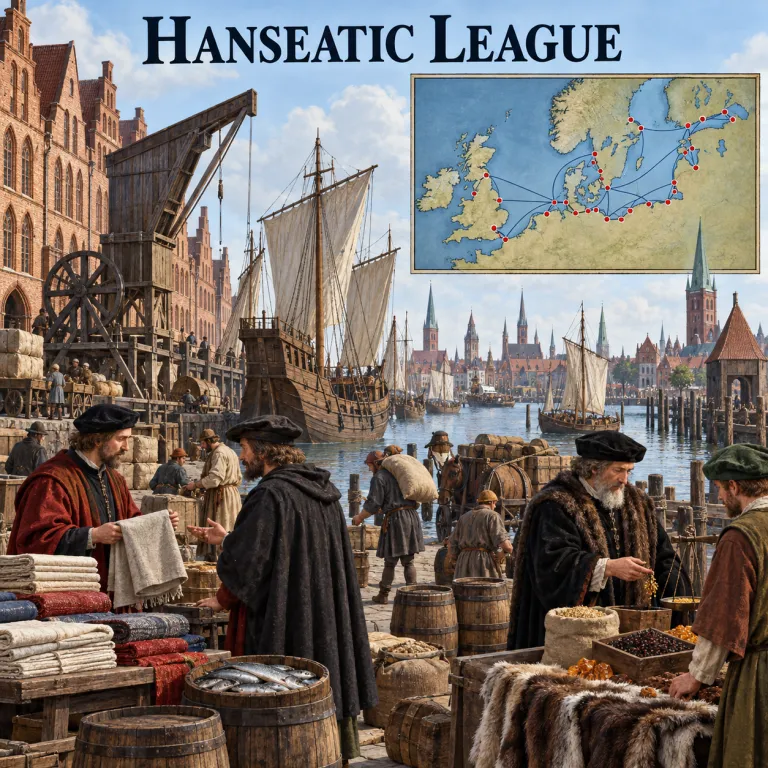
ハンザ同盟の
解説 Definition
中世から近世初期に北ヨーロッパで栄えたハンザ同盟、またはそれに属する都市・商人・交易圏に関することを表す形容詞。歴史や経済の文脈で、同盟への所属や、その商業ネットワークに結びついた性質を示すときに使われる。
Hanseatic means connected with the Hanseatic League, a group of trading cities in northern Europe in the Middle Ages. It can also describe cities, trade, or culture linked to that historical network. The word is mainly used in history and geography.
覚え方のコツ Memory Tip
Hanseatic は単独で覚えるより、Hanseatic League(ハンザ同盟)、Hanseatic city(同盟都市)という固まりで覚えると定着しやすい。現代の一般語ではなく、歴史・貿易史で北ヨーロッパの商人ネットワークを指す形容詞だと押さえる。-ic / -atic は「〜に関する」の形容詞語尾なので、「Hansa に関する=ハンザ同盟の」と処理すると迷いにくい。人名風でも個人名ではなく、Germany 一国ではなく北海・バルト海沿岸の交易圏を連想すると残りやすい。
Do not memorize it alone; learn it in the set phrase `Hanseatic League` or `Hanseatic city`. The ending `-ic` means "related to," so it simply means "related to the Hansa." To make it stick, picture the old trade world around the North Sea and Baltic, not just one modern country.
例文
The Hanseatic League established trade routes across Northern Europe.
ハンザ同盟は北ヨーロッパ全域に交易路を築いた。
Hanseatic merchants dominated commerce in Baltic Sea ports.
ハンザ同盟の商人たちは、バルト海の港で商取引を支配していた。
The Hanseatic cities formed a powerful trading confederation.
ハンザ都市は強力な交易同盟を形成していた。
hanseatic の語源・成り立ち Etymology
中世ラテン語 Hanseaticus に由来し、さらに中低ドイツ語 hanse「商人組合・仲間」へさかのぼります。もとは「商人の連合体に属する」という感覚で、そこから「ハンザ同盟の」という意味になりました。関連語は Hansa、Hanse です。
Hanseatic comes from Medieval Latin Hanseaticus and goes back to Middle Low German hanse, meaning a merchant guild or group. At first it meant belonging to a trading association. Later it became especially linked with the Hanseatic League, the famous alliance of northern European trading cities. Related forms include Hansa and Hanse.
同じレベルの語彙をもっと
外部辞書で調べる
この英単語をクイズで覚えよう