ヘマグルチニン
解説 Definition
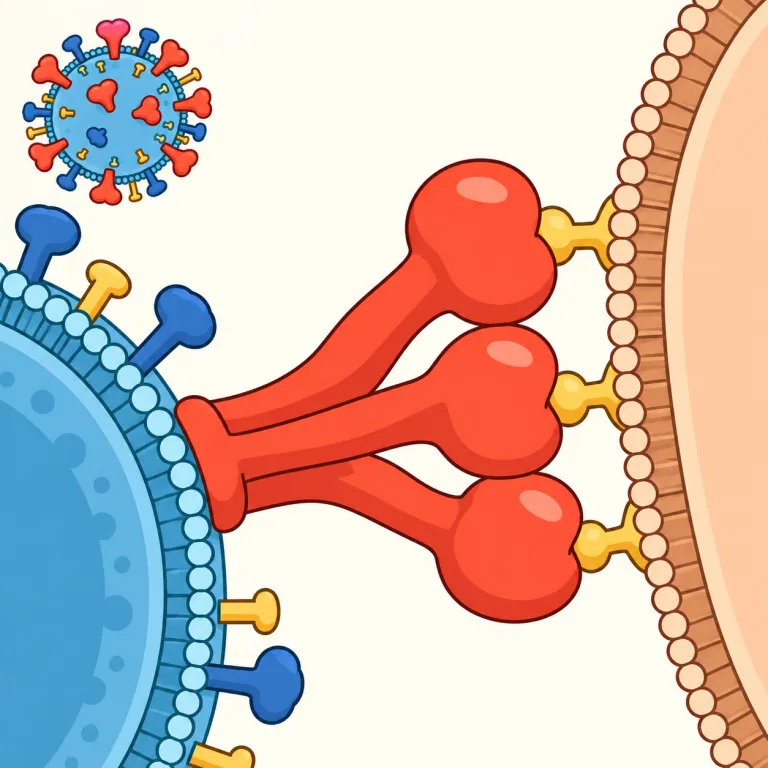
赤血球を凝集させるタンパク質。インフルエンザウイルスの表面にあり、宿主細胞への感染に重要な役割を持つ物質。
Hemagglutinin is a protein found on the surface of some viruses, especially influenza viruses. It helps the virus attach to and enter cells in the body. The term is mainly used in biology and medicine, and it is often shortened to HA.
覚え方のコツ Memory Tip
インフルエンザの型名 H1N1 の H がこれ。まず「HA=ウイルス表面で最初に宿主細胞へ取りつく部品」と固定すると覚えやすい。長い語は hema + agglutinin に分け、hematology の hema- を知っていれば「血」に関係、agglutination を見たことがあれば「くっついて固まる」感じが出る。つまり「赤血球を凝集させる、感染の入口側の表面タンパク質」と一枚絵で覚える。対で出る neuraminidase は放出側なので、H は侵入、N は放出と役割で分けると混同しにくい。
This long word is easier if you break it into `hema` + `agglutinin`. `Hema-` appears in words about blood, and `agglutinate` gives the idea of things sticking together. Many learners remember it through flu names like `H1N1`, where `H` stands for this word.
例文
Hemagglutinin allows viruses to attach to cells.
ヘマグルチニンは、ウイルスの細胞への付着を可能にします。
Scientists study hemagglutinin to develop vaccines.
科学者はワクチンを開発するためにヘマグルチニンを研究する。
The hemagglutinin protein is crucial in viral infection.
ヘマグルチニンというタンパク質は、ウイルスの感染において重要な役割を果たします。
hemagglutinin の語源・成り立ち Etymology
hemagglutinin はギリシャ語 haima「血」+ ラテン語 agglutinare「接着する」に由来する。語尾 -in は物質名で、文字通りは「血をくっつけて固まりにするもの」。関連語は hematology と agglutination。
"Hemagglutinin" is built from Greek "haima," meaning "blood," and Latin "agglutinare," meaning "to glue to" or "stick together," with the ending "-in" for a substance. Its original sense is literally "something that makes blood stick together." Related English words include "hematology" and "agglutination."
同じレベルの語彙をもっと
外部辞書で調べる
この英単語をクイズで覚えよう