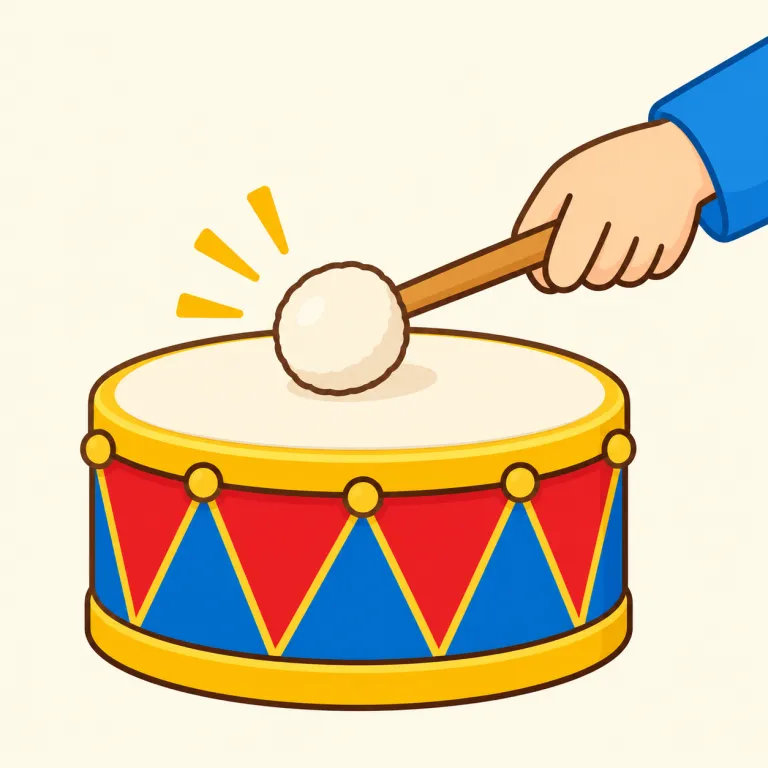
叩く
解説 Definition
hitting は hit(叩く・打つ)の現在分詞・動名詞です。手や物で何かを叩いている動作を表します。
Hitting is the present participle and gerund of hit. In this sense, it describes striking a person or object with a hand, tool, or another object, either as an action in progress or as the name of the activity.
覚え方のコツ Memory Tip
hitting は hit「叩く・打つ」の現在分詞・動名詞です。短母音+子音字で終わるため t を重ねて -ing を付け、hit → hitting とします。発音は hit /hɪt/、hitting /ˈhɪtɪŋ/ で、t の音を保ったまま新しい音節が加わります。hit the drum や stop hitting the table で覚えましょう。
Start with the base verb hit, meaning to strike something. Because hit ends in one vowel followed by one consonant, double the final t before adding -ing: hit becomes hitting, not hiting. Hit is pronounced /hɪt/, and hitting is /ˈhɪtɪŋ/, with the added ending creating another syllable. Use the form after be for an action in progress, as in He is hitting the drum, or as a gerund after stop, as in Stop hitting the table. Picture a hammer repeatedly striking a nail to connect the spelling with the continuing action.
例文
Stop hitting the table.
テーブルを叩くのをやめなさい。
He is hitting the drum.
彼は太鼓を叩いています。
The worker was hitting the nail with a hammer.
作業員はハンマーでくぎを叩いていました。
hitting の類義語・関連語
hitting の語源・成り立ち Etymology
hitting は hit に動名詞・現在分詞の -ing が付いた形で、hit は中英語 hitten、古英語 hittan、さらに古ノルド語 hitta にさかのぼります。原義は“出会う・行き当たる”で、そこから打撃が相手に届く感覚で『打つ』へ発展し、句の hit upon やスウェーデン語 hitta も同系です。
Hitting is formed from hit plus the present-participle or gerund suffix -ing, with the final t doubled according to the usual spelling rule. Hit is found in Middle English as hitten and is generally connected with Old Norse hitta, which meant to meet, encounter, or reach. The idea of reaching or coming into contact with a target developed into the modern sense of striking it.
同じレベルの語彙をもっと
外部辞書で調べる
この英単語をクイズで覚えよう