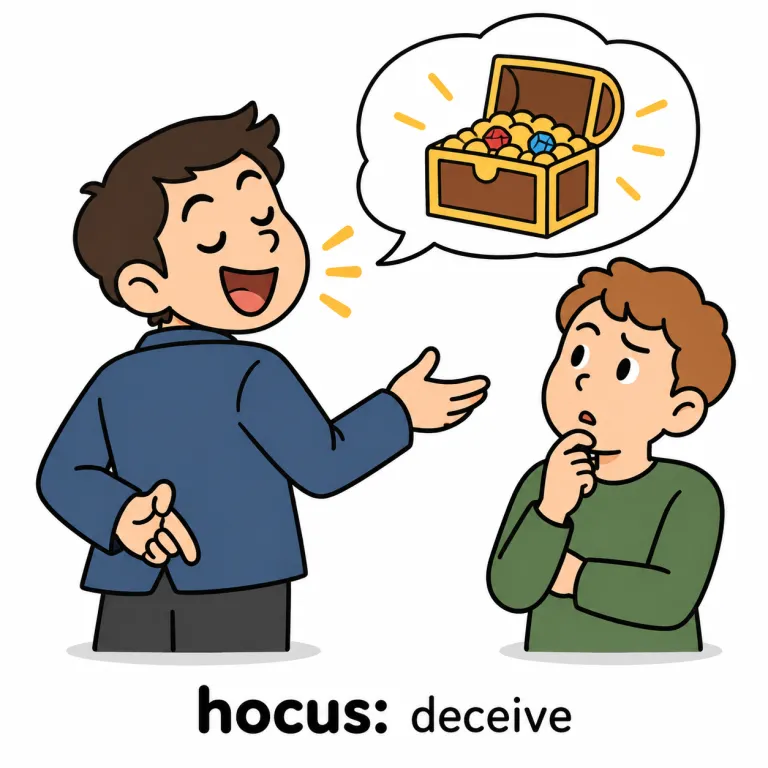
だます / ごまかす
解説 Definition
hocus は「人をだます・ごまかす」という意味の古風な他動詞です。現代の日常英語ではあまり使われません。
Hocus is an old-fashioned transitive verb meaning to deceive, trick, or confuse someone, especially through misleading talk or a dishonest display. It is rare in modern everyday English.
使い方 Usage
使い分け Common distinctions
- hocus は古風な響きがあります。日常会話では trick や deceive が一般的で、古い文章や意図的に古風な表現で hocus を見かけます。 Hocus sounds old-fashioned. Trick and deceive are more usual in everyday conversation; hocus may appear in older texts or deliberately old-fashioned writing.
覚え方のコツ Memory Tip
hocus-pocus「手品の呪文、もっともらしいごまかし」の前半と結び付けます。手品師が巧みな言葉や動作で相手の注意をそらす場面から、「だます・ごまかす」を覚えます。
Link hocus with the familiar expression hocus-pocus. Picture a magician using distracting words and movements, and connect that scene with deceiving or tricking someone.
例文
The cheat tried to hocus the crowd with a false story.
その詐欺師は作り話で群衆をだまそうとしました。
He used smooth words to hocus his partners.
彼は巧みな言葉で仲間をだましました。
hocus の類義語・関連語
類義語
派生語
紛らわしい語
hocus の語源・成り立ち Etymology
hocus-pocus の短縮形で、17世紀から「だます」という動詞用法が記録されている。hocus-pocus 自体の最終的な語源は不明。ラテン語 Hoc est corpus meum をもじったものとする説がよく挙げられるが、証明されてはいない。
Hocus is a shortened form derived from hocus-pocus, an expression recorded in the seventeenth century as mock magical language used by performers. Its ultimate origin is uncertain. A frequently repeated proposal connects it with a distorted form of the Latin phrase hoc est corpus meum, but this explanation has not been proved. From its association with conjuring and deceptive performance, hocus developed the verb sense “to cheat, trick, or bewilder.”
同じレベルの語彙をもっと
外部辞書で調べる
この英単語をクイズで覚えよう