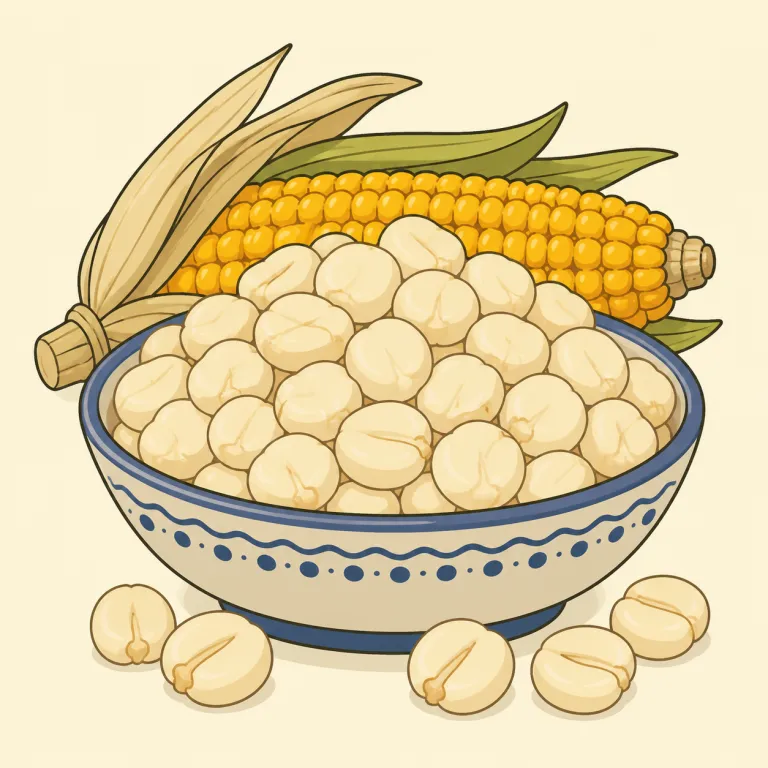
灰汁処理したトウモロコシ
解説 Definition
トウモロコシの粒をアルカリ溶液(通常は水酸化カルシウム)に浸して処理した食品。主にアメリカ南部やラテンアメリカ料理で使われる。
Hominy is corn that has been specially treated, usually by soaking it in an alkaline solution, so the outer layer comes off and the texture changes. It is used in some traditional dishes, especially in the Americas. This is a food word and is mostly seen in cooking or cultural contexts.
覚え方のコツ Memory Tip
corn / maize は「トウモロコシ」そのもの、sweet corn は甘い品種、grits はひいたもの。これに対して hominy は「粒の形を残したまま、食べやすく加工されたトウモロコシ」とセットで覚えると残りやすいです。単独で意味を取るより、canned hominy, hominy grits, pozole with hominy のように料理・食材名の形で覚えるのが実用的。見た目は corn に近いのに、ただの粒ではなく“処理済みの粒”なのが識別ポイントです。
Remember it by contrast: `corn` or `maize` is the basic plant, but `hominy` is corn that has been specially processed. It is easier to fix in memory through food phrases like `canned hominy`, `hominy grits`, or `pozole with hominy`. The key hook is: it still looks like corn, but it is not just ordinary corn.
例文
Hominy is a staple ingredient in Southern American cuisine.
ホミニーはアメリカ南部料理の重要な食材である。
The corn kernels were processed into hominy by soaking them in alkali.
トウモロコシの粒はアルカリに浸すことでホミニーに加工された。
Hominy grits are popular for breakfast in the American South.
ホミニーの粗びき粉を煮たグリッツは、アメリカ南部で朝食として人気がある。
hominy の類義語・関連語
類義語
hominy の語源・成り立ち Etymology
北米先住民のヴァージニア・アルゴンキン語群、特にポウハタン語系の語に由来し、原義は「砕く・打つなどの処理をしたトウモロコシ」と考えられます。だから hominy はただの corn でなく、手を加えた粒を指す語です。関連形に rockahominy、hominy grits があります。
Hominy comes from a word in an Algonquian language of eastern North America, probably from Powhatan. It referred not simply to corn, but to corn that had been processed by pounding or other treatment. That is why hominy in English kept the sense of prepared maize rather than the plant in general.
同じレベルの語彙をもっと
外部辞書で調べる
この英単語をクイズで覚えよう