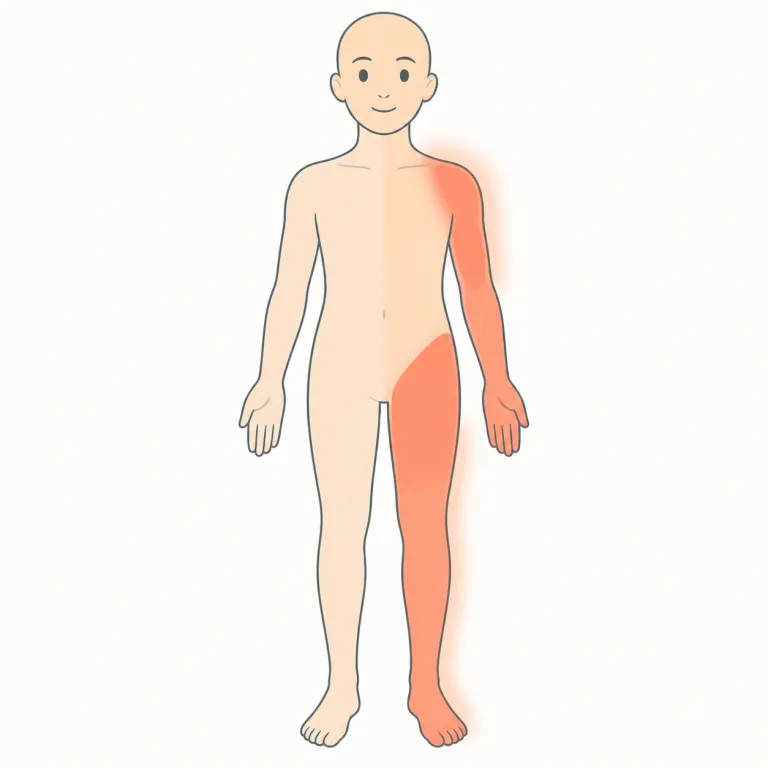
同側
解説 Definition
同じ側に位置する、または関連する医学用語。身体の同じ側の構造や神経に関連します。
Ipsilateral means located on or affecting the same side of the body. This word is common in medicine, anatomy, and biology when doctors or researchers describe body parts, injuries, or nerve actions. It is the opposite of "contralateral."
覚え方のコツ Memory Tip
lateral「側の」を知っていると覚えやすい語です。bilateral(両側の)や unilateral(片側の)と同じ lateral 系で、ipsi- が付くと「同じ側の」になり、ipsilateral で「同側の」。対になる重要語は contralateral「反対側の」。医学では ipsilateral symptoms, ipsilateral limb のように出やすく、left/right そのものより「基準に対して同じ側か反対側か」を対で覚えると混同しにくいです。
Focus on `lateral`, which means "side," as in `bilateral` and `unilateral`. The special part is `ipsi-`, which tells you it is the same side. Learn it together with `contralateral`, because the pair is much easier to remember than either word alone.
例文
The right cerebellar injury caused ipsilateral coordination problems in the right arm.
右側の小脳損傷により、同側の右腕に運動協調の障害が生じました。
The patient had a right-sided injury and ipsilateral arm weakness.
患者には右側の損傷と、同側の腕の筋力低下が見られました。
Tests revealed ipsilateral sensory loss in the right leg, on the side of the spinal lesion.
検査により、脊髄病変と同じ側の右脚に感覚の消失が認められました。
ipsilateral の類義語・関連語
ipsilateral の語源・成り立ち Etymology
ipsilateralはラテン語ipse「そのもの・同じ」+lateralis「側の」に由来し、医学で「体の同じ側の」を表します。later-はlateralやbilateralにも見られ、語の形どおり「同じ側だから同側」と納得できます。
Ipsilateral comes from Latin ipse, meaning "self" or "the same one," and lateralis, meaning "of the side." In medical Latin, these parts were joined to mean "on the same side." The later- root also appears in English words like lateral and bilateral.
同じレベルの語彙をもっと
外部辞書で調べる
この英単語をクイズで覚えよう