対側の
解説 Definition
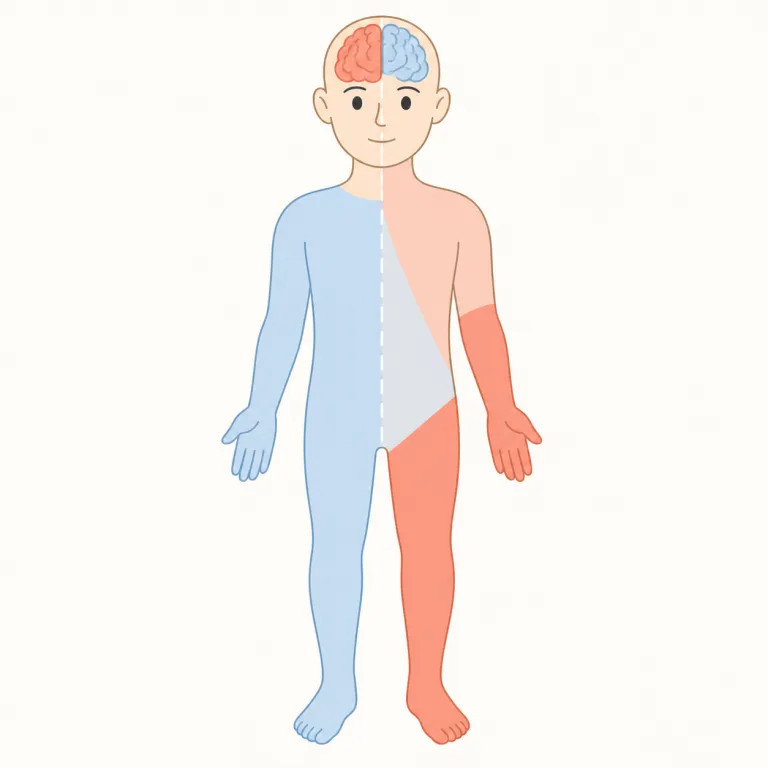
体や器官の反対側にある、または反対側に関係することを表す医学・解剖学の形容詞です。神経学では、片側の脳や脊髄の病変が体の反対側の症状と関係するときによく使われます。
Contralateral means located on or relating to the opposite side of the body or another structure. It is mainly used in medicine, biology, and anatomy. For example, it describes a body part or effect that appears on the other side rather than the same side.
覚え方のコツ Memory Tip
contra は contrary・contrast で見かける「反対」の感覚、lateral は bilateral や lateral move のように「横・側」の感覚。合わせて「反対側の」と取ると覚えやすいです。医学では ipsilateral(同じ側の)と対で出ることが多く、片側の病変なのに症状は反対側に出る、という場面で結びつけると定着します。contralateral weakness、contralateral side などの形で見たら「向かい側」と即答できるようにすると強いです。
Split it into `contra-` and `lateral`. `Contra-` gives the idea of opposition, and `lateral` means side. Together, they point clearly to `the opposite side`. It is often learned as the opposite of `ipsilateral`, which means `on the same side`.
例文
The contralateral hemisphere controls the opposite side of the body.
対側の半球は体の反対側を制御している。
A stroke on the right side causes contralateral paralysis.
脳の右側で起きた脳卒中は、対側性の麻痺を引き起こす。
Contralateral movements require coordination between brain hemispheres.
対側性の運動は脳の半球間の調整を必要とする。
contralateral の類義語・関連語
contralateral の語源・成り立ち Etymology
contralateral は contra-「反対側へ」と lateral「側面の」の結合です。lateral はラテン語 lateralis、さらに latus「わき・側」にさかのぼり、関連語に bilateral と ipsilateral があります。体の「こちらに対する向こう側」をそのまま形にした語です。
Contralateral combines contra-, meaning "opposite" or "against," with lateral, meaning "of the side." Lateral comes from Latin lateralis, from latus, "side." The word was formed to describe something on the opposite side, especially in relation to the body; related words include bilateral and ipsilateral.
同じレベルの語彙をもっと
外部辞書で調べる
この英単語をクイズで覚えよう