ツタ
解説 Definition
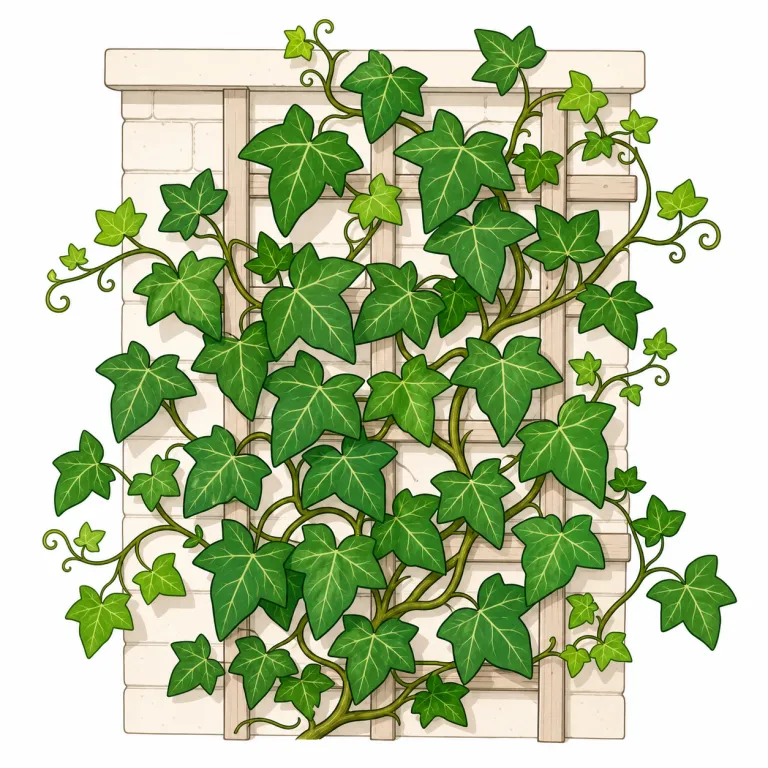
壁や木に絡みついて伸びる、つる性の常緑植物を指す。英語の ivy は特にヘデラ類などのツタを表し、建物を覆う植物や庭園の装飾として語られることが多い。葉が密に茂って表面を覆う様子を描く場面や、古い建物の情景描写でもよく使われる。
Ivy is a climbing plant with green leaves that grows on walls, trees, and buildings. It is common in gardens and natural areas. The word usually refers to the plant itself, not a general type of grass or bush.
覚え方のコツ Memory Tip
まず vine を知っているなら、その中でも ivy は「壁や木にぴったり絡みつき、葉で表面を覆うツタ」と絞って覚えると残りやすい。単に長く伸びるだけでなく、ivy-covered wall のように建物を緑で包む絵が典型。古いレンガ校舎にツタがからむ姿から Ivy League を連想すると定着しやすい。grapevine のように実を意識する vine と違い、ivy は観賞用・被覆の印象が強い。poison ivy は別表現としてセットで見かけやすい。
Think of `ivy` as the plant that climbs and covers walls, not just any vine. A strong image is an old brick school building with green ivy all over it. That also helps you remember `Ivy League`, and you may often see the phrase `poison ivy` too.
例文
The old building was covered with ivy.
その古い建物はツタに覆われていた。
Ivy grows quickly on the stone wall.
ツタはその石壁に沿ってすばやく伸びる。
The ivy-covered cottage looked charming.
ツタに覆われたそのコテージは魅力的に見えた。
ivy の類義語・関連語
紛らわしい語
ivy の語源・成り立ち Etymology
ivy は古英語 īfig にさかのぼるゲルマン系の古い植物名で、ラテン語やギリシャ語ではなく英語の土着語に近い語です。古くから壁や木に絡みつくつる植物を指したため、語の響き自体に生活語らしさがあります。ivied や ivy-covered にも同じ語幹が残ります。
Ivy comes from Old English ifig, an old Germanic plant name. Unlike many English words, it does not come from Latin or Greek, but from a native word used in everyday life. It has long referred to the climbing plant, and the same old root remains in forms like ivied and ivy-covered.
同じレベルの英単語をもっと
外部辞書で調べる
この単語を英単語クイズで覚えよう