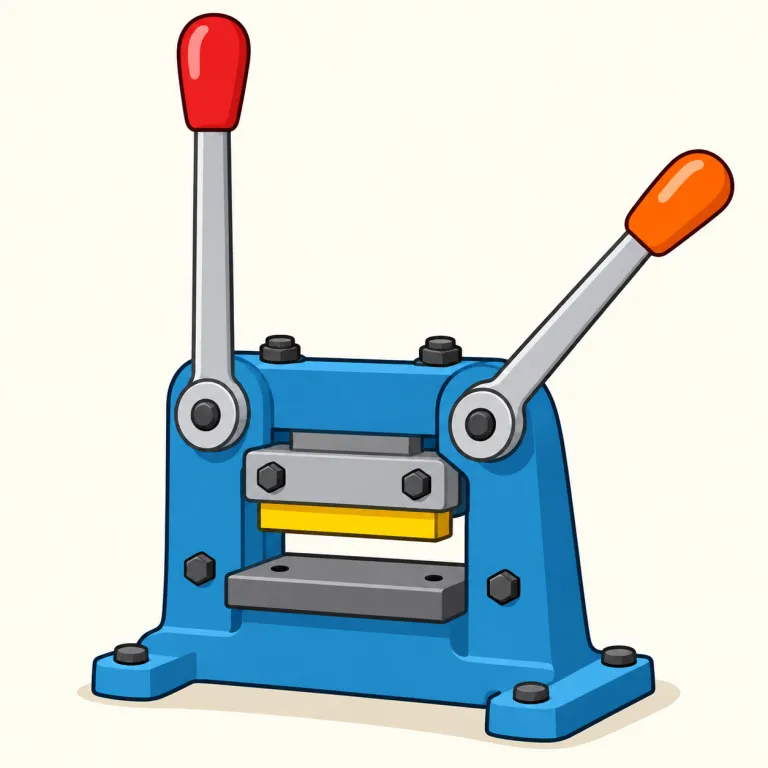
レバー
解説 Definition
levers は lever(レバー、てこ)の複数形です。機械を動かす取っ手や、力を小さくして物を動かす道具を複数指すときに使います。
Levers is the plural form of lever. It refers to two or more rigid bars used to move or lift something with reduced effort, or to projecting handles that are pushed or pulled to control machines or mechanisms.
覚え方のコツ Memory Tip
levers は lever「レバー、てこ」の規則的な複数形で、-s を加えた形です。語末の s は有声音 /z/ で発音します。two levers、pull the levers、control levers のように、複数の操作棒やてこを扱う場面で覚えましょう。日本語の「レバー」と違い、英語では機械の操作棒だけでなく力を増幅する「てこ」も表します。
Levers is simply the regular plural of lever, formed by adding -s. Since lever ends in a voiced sound, the plural ending is pronounced /z/. Picture a machine with two handles and use the natural phrases two levers, pull the levers, and control levers. Also remember the basic tool: a rigid bar that pivots to help move a heavy object with less effort. This second meaning prevents the Japanese loanword レバー from narrowing your understanding to a machine handle alone. One lever is singular; two or more are levers.
例文
The machine has two levers.
その機械にはレバーが2本あります。
Pull the red levers to open the doors.
赤いレバーを引くとドアが開きます。
The engineer checked the levers before starting the test.
技師は試験を始める前にレバーを点検しました。
levers の類義語・関連語
levers の語源・成り立ち Etymology
古フランス語のlever(持ち上げる)に由来し、さらにラテン語のlevis(軽い)が語根です。「重い物を軽い力で動かす」という語源のイメージそのままで「てこ・操作棒」を意味します。同語根にlevitate(浮遊する)やelevator(昇降機)があります。
Levers is the regular plural of lever. Lever entered English from Old French levier, a lifting device, related to the verb lever, “to raise.” These forms ultimately reflect Latin levare, “to raise or make lighter,” from levis, “light in weight.” The history matches the tool’s function: a lever allows a load to be raised or moved with less applied force. The final -s simply marks more than one lever.
同じレベルの語彙をもっと
外部辞書で調べる
この英単語をクイズで覚えよう