ローム
解説 Definition
loam は砂・シルト・粘土がほどよく混ざった、植物の栽培に適した土壌という意味です。日本語の「ローム」は地質名として使われることもありますが、英語では園芸や農業で土の性質を表す語としてよく使います。
Loam is soil containing a relatively balanced mixture of sand, silt, and clay, often with organic matter. It commonly holds nutrients and moisture while still draining well, making many kinds of loam suitable for gardening and agriculture.
覚え方のコツ Memory Tip
英語の loam は日本の地質用語「ローム層」だけに限定されず、砂・シルト・粘土がほどよく混ざった栽培向きの土を指す。rich loam、sandy loam、well-drained loam など、植物が育ち、水分を保ちながら重くなりすぎない畑や庭の土を思い浮かべる。
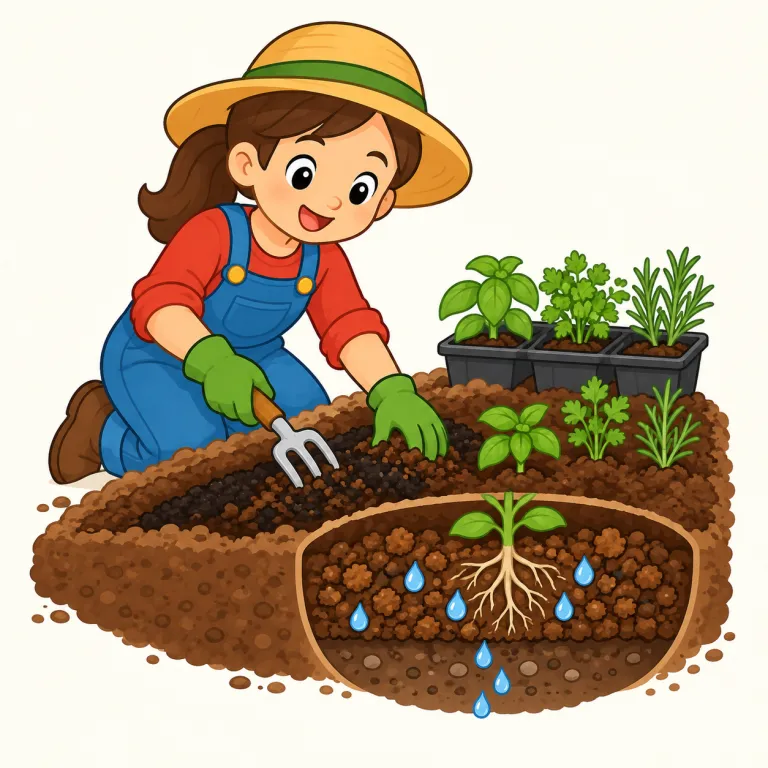
Think of loam as balanced growing soil rather than simply “clay” or the specifically Japanese geological use of ローム. It combines sand, silt, and clay in proportions that can provide both moisture retention and drainage. Picture a gardener planting tomatoes or herbs in rich, deep loam that stays moist without becoming extremely heavy. Useful combinations include rich loam, sandy loam, clay loam, and well-drained loam. Sand drains quickly, clay holds water and compacts easily, while loam is valued because its mixed texture often offers a practical middle ground for cultivation.
例文
Tomatoes grow well in rich loam with good drainage.
トマトは水はけのよい肥えたローム質の土でよく育ちます。
The gardener mixed compost into the loam before planting herbs.
庭師はハーブを植える前に、ローム質の土に堆肥を混ぜました。
This field has deep loam that holds moisture without becoming too heavy.
この畑には、水分を保ちながら重くなりすぎない深いローム質の土があります。
loam の類義語・関連語
loam の語源・成り立ち Etymology
古英語 lām(粘土)に由来し、ゲルマン祖語 *laimaz にさかのぼる。ドイツ語 Lehm(粘土)と同根で、lime(石灰)とも関連。砂・粘土・腐植が適度に混ざった肥沃な土壌を指し、農業で理想的な土として知られる。
Loam descends from Old English lām, a word for clay or clay-rich earth, and is related to German Lehm. These forms go back to a Germanic word associated with sticky earth or clay. Lime is historically related through the same wider word family, although its modern meaning is different. Over time, English loam developed its present agricultural sense: soil made from a useful mixture of sand, silt, and clay rather than pure clay alone.
同じレベルの語彙をもっと
外部辞書で調べる
この英単語をクイズで覚えよう