単極子、磁気単極子
解説 Definition
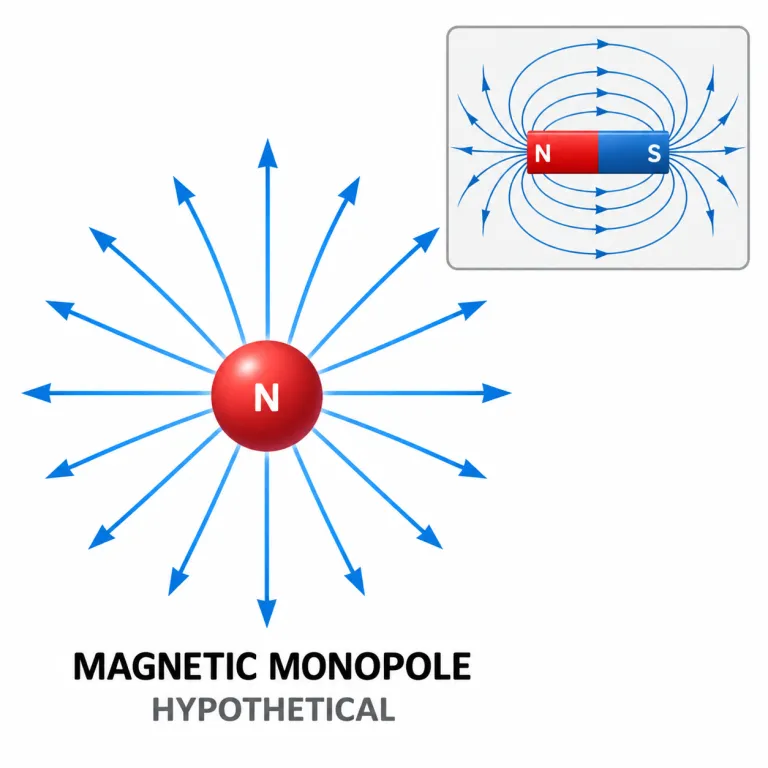
一方の極だけを持つもの、またはそのような粒子を指す名詞。物理学では特に磁気単極子を指すことが多く、N極またはS極のどちらか一方だけを持つ仮説上の存在として、理論研究で重要視されている。
A monopole is something that has only one pole or one end with a particular property. In physics, it often refers to a theoretical magnetic pole existing alone, which is different from the usual north-south pair. The word is technical and mostly used in science.
覚え方のコツ Memory Tip
mono- は monotone, monologue などの「1つ」、pole は north pole / south pole の「極」と結びつけると覚えやすいです。つまり monopole は「極が1つだけ」の発想。ふつう磁石は2極セットなので、 dipole(双極子)や bipolar(両極の)と対比すると記憶に残ります。物理では magnetic monopole という形で見ることが多く、「本来ペアの極が片方だけ孤立している珍しい存在」というイメージで固定すると忘れにくいです。
`Mono-` means one, and `pole` makes you think of the north pole and south pole. So `monopole` is the idea of only one pole by itself. That is why it stands out next to `dipole` or `bipolar`, where two poles go together.
例文
A magnetic monopole would behave differently from a dipole.
磁気単極子は双極子とは異なる振る舞いを示すはずだ。
Physicists continue searching for evidence of a monopole.
物理学者たちは今も単極子の証拠を探し続けている。
The monopole concept remains important in theoretical physics.
単極子という概念は理論物理学で今なお重要である。
monopole の類義語・関連語
対義語
monopole の語源・成り立ち Etymology
monopole はギリシャ語 mono-「一つ」と polos「軸・極」に由来する pole を組み合わせた語です。本来は対になりやすい極が一つだけ独立したもの、という発想なので「単極」やアンテナの「モノポール」の意味になります。polar や polarity も同じ pole 系の語です。
Monopole is made from mono-, meaning "one," and pole. Pole comes through Greek polos, meaning "axis" or "pivot," and later also "end point" or "extreme." The word grew from the idea of a single pole standing alone, instead of the usual pair. Related words include polar and polarity.
同じレベルの語彙をもっと
外部辞書で調べる
この英単語をクイズで覚えよう