下手な絵、絵の駄作
noun 名詞技能や芸術性に乏しく、雑に描かれた絵を軽蔑的に指す可算名詞です。単なる絵画一般ではなく、作品の出来が悪いという否定的評価を込めて、主に批評的な文脈で a daub の形で使います。
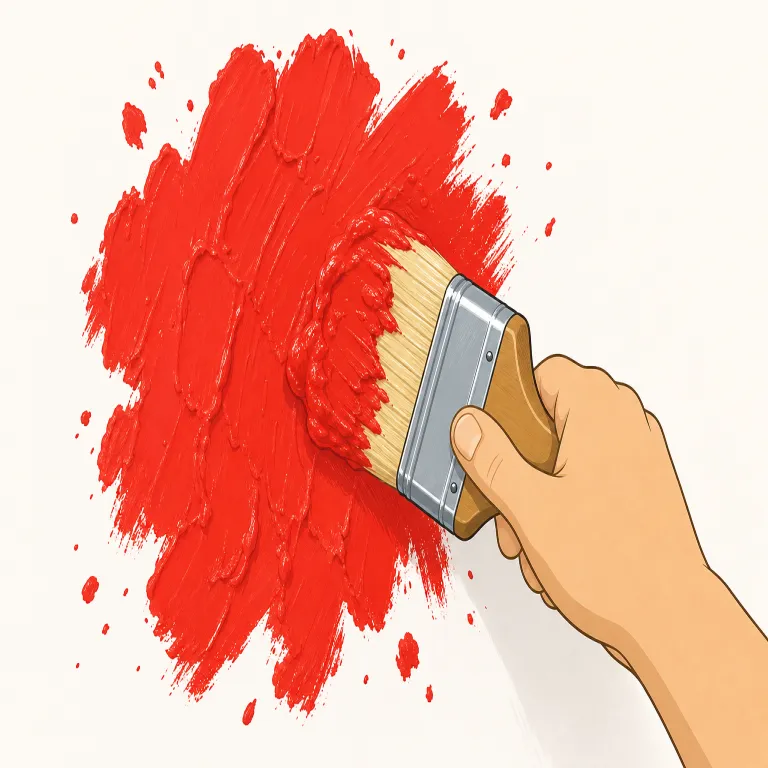
daub は英検1級レベルの英単語で、「塗る」という意味があります。発音記号は /dɔːb/ です。
何かに色や物質を雑に、あるいは厚く塗ること。特に美しくない、または不正確な方法で塗装や装飾を施すことを意味します。
To daub means to put a substance such as paint, mud, or cream onto a surface in a rough or careless way. It often suggests that the material is spread thickly rather than applied neatly. The word can be used in everyday situations and in art, but it often has a slightly negative tone.
paint が「普通に塗る」なら、daub は「雑に・べったり塗りつける」寄り。きれいに仕上げる感じではなく、絵の具や泥を表面に厚くのせてしまう場面を思い浮かべると残りやすいです。child daubed paint on the wall のように、子どもが壁にぐちゃっと塗る絵で覚えるとよいです。with や on と結びつきやすく、daub A with B / daub B on A の形も一緒に押さえると定着します。dab とつづりが少し似ますが、dab は「軽くちょんと付ける」、daub は「べたっと塗る」と対比すると混同しにくいです。
Think of `daub` as stronger and messier than `paint`. A child can daub paint on a wall, with thick color spread badly, not carefully. Compare it with `dab`: `dab` is just a small light touch, but `daub` is a heavy, messy one.
He started to daub paint onto the canvas with broad, loose strokes.
彼は大きく自由な筆遣いで、キャンバスに絵の具を雑に塗り始めました。
The artist would daub thick paint on the canvas to create texture.
その画家は質感を出すため、キャンバスに絵の具を厚く塗りつけたものです。
Children love to daub paint on paper during art class.
子どもたちは図工の授業で紙に絵の具を塗りたくるのが好きです。
文脈によって、次の意味でも使われます。
技能や芸術性に乏しく、雑に描かれた絵を軽蔑的に指す可算名詞です。単なる絵画一般ではなく、作品の出来が悪いという否定的評価を込めて、主に批評的な文脈で a daub の形で使います。
daub は古フランス語 dauber「しっくいを塗る・べたべた塗る」に由来し、中英語を経て英語に入りました。細かい分解よりも「表面に粗く塗りつける」という感触が核で、そこから単に塗る、汚すという意味へ広がりました。関連語は bedaub, dauber。
Daub came into English through Middle English from Old French dauber, meaning "to plaster" or "to smear." Its history centers on the idea of putting something on a surface in a rough, heavy way rather than carefully. From that, the meaning spread to painting, smearing, or making something dirty; related words include bedaub and dauber.
この英単語をクイズで覚えよう