型、タイプ
noun 名詞人や物に共通する性格・様式を、ものを作る型になぞらえて表します。of the same mould や in a different mould のように使い、外形ではなく人物や作品などの特徴的なタイプを指します。
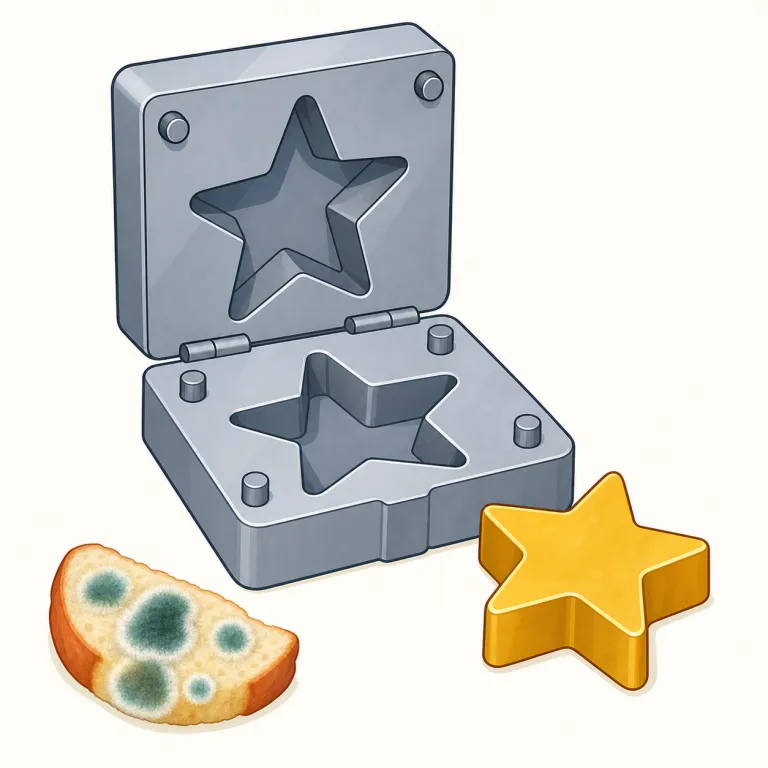
mould はTOEIC 860・TOEFL 80・IELTS 6.5レベルの英単語で、「鋳型、金型、カビ」という意味があります。発音記号は /moʊld/ です。
mould はイギリス英語の綴りで、主に二つの名詞の意味を持ちます。一つは金属や菓子などを一定の形に作るための鋳型・金型、もう一つは湿気の多い場所や食品に生えるカビです。文脈によって工業用の型か菌類の一種かを判断します。
A mould is a hollow shape used to form something, such as metal, plastic, or food, into a particular form. In British English, it can also mean a type of fungus that grows in damp places; the American spelling is usually "mold."
まず米語の綴りが mold、イギリス英語では mould になるとセットで覚えると定着しやすい語です。意味は大きく「材料を流し込んで形を作る型」と「湿気のある所に広がるカビ」の二本柱。どちらも“表面に現れる形”をイメージすると一つにまとまります。cake mould, plastic mould, black mould などの形でよく見かけ、工業・料理なら「型」、食品や壁・浴室の話なら「カビ」と文脈で即判定できます。model は設計や見本寄り、mould は“実際に形を与えるもの”という違いも意識すると混同しにくいです。
Remember that British English writes it "mould," while American English usually writes "mold." The word has two main uses: a shape-making form like a cake mould, and fungus in wet places like black mould. Let the context guide you: cooking and industry suggest a form, walls and food suggest fungus.
The craftsman poured molten metal into the mould to create the statue.
職人は像を作るために、鋳型に溶けた金属を流し込みました。
They found mould growing on the walls of the old basement.
彼らは古い地下室の壁にカビが生えているのを見つけました。
The chocolate was set in a heart-shaped mould.
そのチョコレートはハート形の型に入れて固められました。
この語をはじめて出題された 30人 のうち 19人 が正解しました(63%)。
えいたんごクイズの回答から集計した独自データです。1人につき最初に出題されたときの1回だけを数えており、復習や2回目以降の回答、「わからない」と時間切れは含みません。 集計時点は 2026年9月19日 です。
文脈によって、次の意味でも使われます。
人や物に共通する性格・様式を、ものを作る型になぞらえて表します。of the same mould や in a different mould のように使い、外形ではなく人物や作品などの特徴的なタイプを指します。
粘土などの柔らかい材料を手や型で特定の形に成形することを表します。また、教育や環境などが人格や考え方、社会のあり方を徐々に形作る比喩的な意味でも使い、mould A into B や be moulded by ... の形が典型です。
mould「金型」は古フランス語 modle を経てラテン語 modulus「尺度・小さな型」に由来し、model, module と関係します。一方 mould「カビ」は別系統で、古ノルド語 mygla など「かびる」に関わる語とされます。現代英語では同じ綴りでも、「型」と「カビ」は語源が異なる二つの語義として押さえるとよいです。
Mould in the sense of a form comes through Old French modle from Latin modulus, meaning "small measure" or "small form." This source is also related to model and module. The fungus sense has a separate origin, probably from a Germanic source related to Old Norse mygla, meaning "to grow moldy." Thus, the senses "form" and "fungus" are historically distinct words that now share the same spelling.
この英単語をクイズで覚えよう