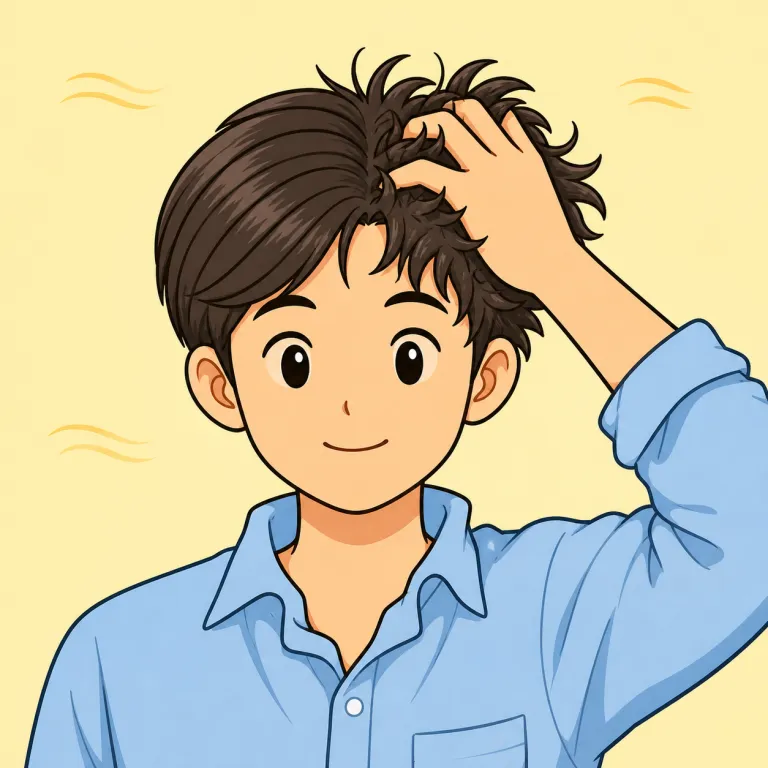
くしゃくしゃにする、乱す
解説 Definition
muss は主に動詞で、髪や服、寝具などをこすったり動かしたりして、整った状態を崩し、くしゃくしゃで乱雑な状態にすることを表します。強い破壊ではなく、見た目が少し乱れる程度の場面で使われることが多く、muss up の形でもよく用いられます。
To muss something means to make it messy, untidy, or out of shape. It is often used for hair, clothes, or bed sheets when they become slightly disordered rather than seriously damaged.
覚え方のコツ Memory Tip
muss は mess と近い見た目で覚えると残りやすい語です。どちらも「乱れる」方向ですが、mess が部屋・状況まで含む広い「めちゃくちゃ」なのに対し、muss は髪・服・ベッドなどを少しくしゃっと乱す感じに寄ります。muss up one’s hair の形が典型で、破壊するのでなく整った見た目を崩す語。fuss ともつづりが近いので、見間違えたら「外見がもしゃっと乱れる方が muss」と整理すると定着しやすいです。
`Muss` looks a lot like `mess`, and both suggest something not neat anymore. The difference is that `muss` often means making hair, clothes, or a bed a little untidy, not complete chaos. The phrase `muss up your hair` is a strong memory hook. Think: small, soft disorder, not a big mess.
例文
The wind mussed her hair as she walked along the beach.
浜辺を歩いている間に、風が彼女の髪をくしゃくしゃにしました。
Don't muss up your clothes before the photo.
写真を撮る前に服をくしゃくしゃにしないでください。
He mussed his hair with one hand before stepping outside.
彼は外に出る前に片手で髪をくしゃくしゃにしました。
muss の類義語・関連語
類義語
対義語
muss の語源・成り立ち Etymology
muss は16世紀から見られる英語で、確かな語源は不詳です。のちに「乱雑な状態」「髪や服をくしゃくしゃにする」の意味で定着し、語感自体が「ぐちゃぐちゃ感」を伝える語になりました。関連語は mussy, mussed。
Muss has been used in English since the 1500s, but its exact origin is unknown. It became common for the idea of disorder or making hair and clothes look untidy, probably helped by its rough, messy sound. Related English forms include mussed and mussy.
同じレベルの語彙をもっと
外部辞書で調べる
この英単語をクイズで覚えよう