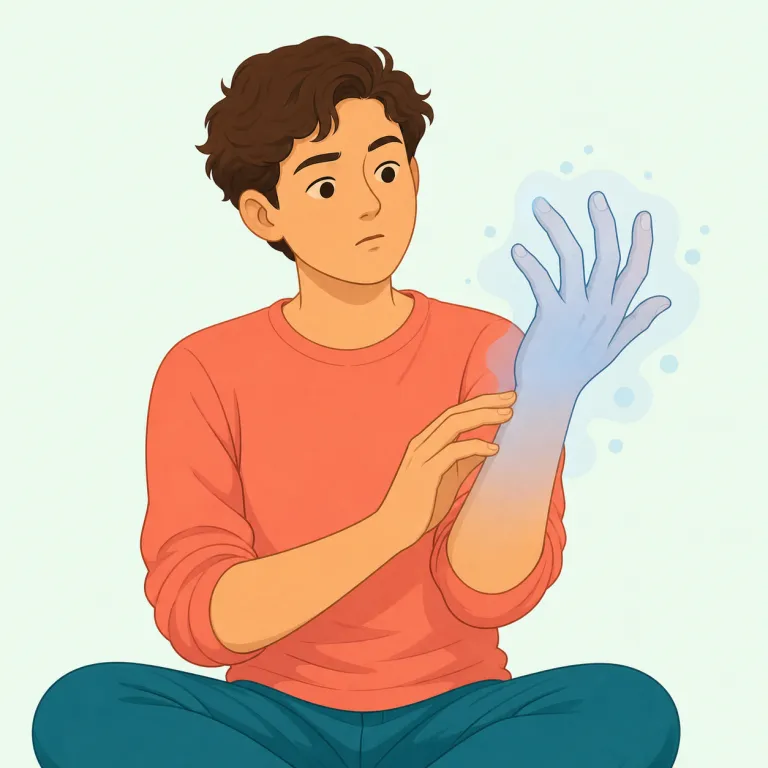
しびれている
解説 Definition
「numb」は、感覚がなくなってしびれている状態、または痛みや感情を感じられなくなった状態を表す形容詞です。寒さや圧迫によって身体の一部の感覚が失われた状態を指すほか、強いショックや悲しみによって感情が麻痺した状態にも使われます。
This adjective describes a body part that has lost its sense of touch, often because of cold, pressure, or medicine. It can also describe being unable to feel emotion after a severe shock or loss.
覚え方のコツ Memory Tip
numb は語末の b を発音せず「ナム」に近く、寒さや圧迫で感覚がなくなった「しびれた」状態を表します。go numb は「しびれてくる」、feel numb は「感覚がないと感じる」です。身体だけでなく、衝撃や悲しみで感情が麻痺した状態にも使えます。
The final b in numb is silent. Picture your fingers going numb after holding something cold, and remember the common phrases go numb and numb with cold.
例文
My fingers went numb from holding the ice pack for too long.
アイスパックを長く持ちすぎて、指がしびれてしまった。
She felt numb after hearing the shocking news.
衝撃的な知らせを聞いて、彼女は何も感じられなくなりました。
The dentist made my gum numb before fixing my tooth.
歯科医は歯の治療前に私の歯茎をしびれさせました。
numb の類義語・関連語
派生語
numb の語源・成り立ち Etymology
numbは中英語nomen(奪われた)に由来し、古英語niman(取る)の過去分詞が形容詞化したもの。「感覚を奪われた」が原義。語末のbは後から加わった綴り字。関連語にbenumb(麻痺させる)がある。感覚が「取り去られた」状態という発想が面白い。
Numb comes through Middle English from a form connected with Old English niman, meaning "to take." Its original image is of feeling being taken away, and the final b was added to the spelling later.
同じレベルの語彙をもっと
外部辞書で調べる
この英単語をクイズで覚えよう