いやに愛想のよい、うさんくさい
adjective 形容詞人の態度・笑顔・話し方などが、過度になめらかで愛想よく、誠実さに欠けて見えることを表す。表面的には丁寧でも、下心や信用できない印象を与える場合に使われる否定的な表現である。単に友好的であるという意味ではない。
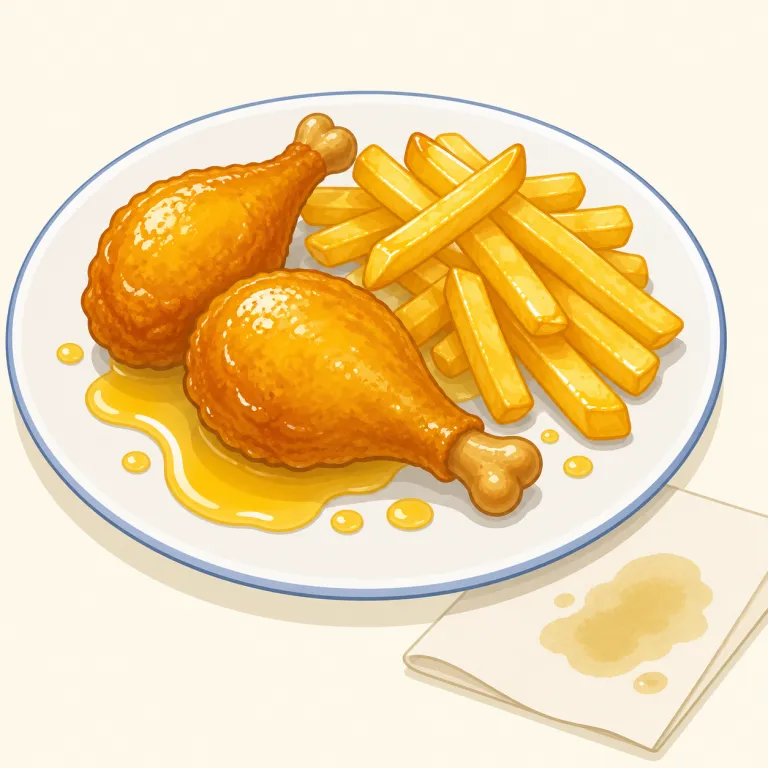
greasy は英検1級レベルの英単語で、「脂っこい」という意味があります。発音記号は /ˈɡriːzi/ です。
油分が多く、べたついた状態や質感を表す形容詞。食べ物や物の表面が油でコーティングされているような感触を指す。不衛生さや不快感を伴うニュアンスで使われることが多い言葉である。
Greasy means covered with oil or fat, or containing too much of it. It is commonly used for food, hair, skin, or surfaces that feel oily and unpleasant. The word often suggests something dirty, heavy, or slippery.
greasy は grease(油・脂)を知っていれば、「脂がついてベタつく感じ」とまとめて取れる。-y は rainy, muddy などと同じく「〜っぽい」。似た oily もあるが、oily が中立的に「油分がある」と言えるのに対し、greasy は不快なベタつきや重さが出やすい。食べ物なら greasy food で「脂っこくて重い料理」、髪なら greasy hair で「脂でぺたっとした髪」。不衛生・不快寄りの語感まで一緒に覚えると残りやすい。
Start with `grease`, meaning oil or fat, then add `-y`, like in `rainy` or `muddy`. That gives the feeling of something covered with fat and unpleasantly sticky. `Greasy food` and `greasy hair` are common, and the word often sounds more negative than `oily`.
The greasy fried chicken left oil stains on the napkins.
脂っこいフライドチキンがナプキンに油のシミをつけた。
He wiped his greasy hands on a cloth before shaking hands.
握手する前に、彼は脂のついた手を布で拭いた。
The mechanic's uniform was covered in greasy marks from the engine.
整備士の作業服はエンジンの油汚れで覆われていた。
この語をはじめて出題された 47人 のうち 35人 が正解しました(74%)。
えいたんごクイズの回答から集計した独自データです。1人につき最初に出題されたときの1回だけを数えており、復習や2回目以降の回答、「わからない」と時間切れは含みません。 集計時点は 2026年9月19日 です。
文脈によって、次の意味でも使われます。
人の態度・笑顔・話し方などが、過度になめらかで愛想よく、誠実さに欠けて見えることを表す。表面的には丁寧でも、下心や信用できない印象を与える場合に使われる否定的な表現である。単に友好的であるという意味ではない。
greasy は grease「脂」+ -y「〜に満ちた」で、語源の grease は古フランス語 graisse を経て、俗ラテン語系の「どろりと太いもの」に由来します。もとの「厚くべたつく」感覚が、そのまま「脂っこい」「油でぬるぬるした」へつながります。関連語は grease, degrease。
"Greasy" is built from "grease" plus the adjective ending "-y," meaning full of something. "Grease" came through Old French "graisse," from Late Latin roots connected with thick, fatty matter. The original sense of something heavy, thick, and sticky developed naturally into the modern idea of being oily or covered with fat.
この英単語をクイズで覚えよう